
 Pin it
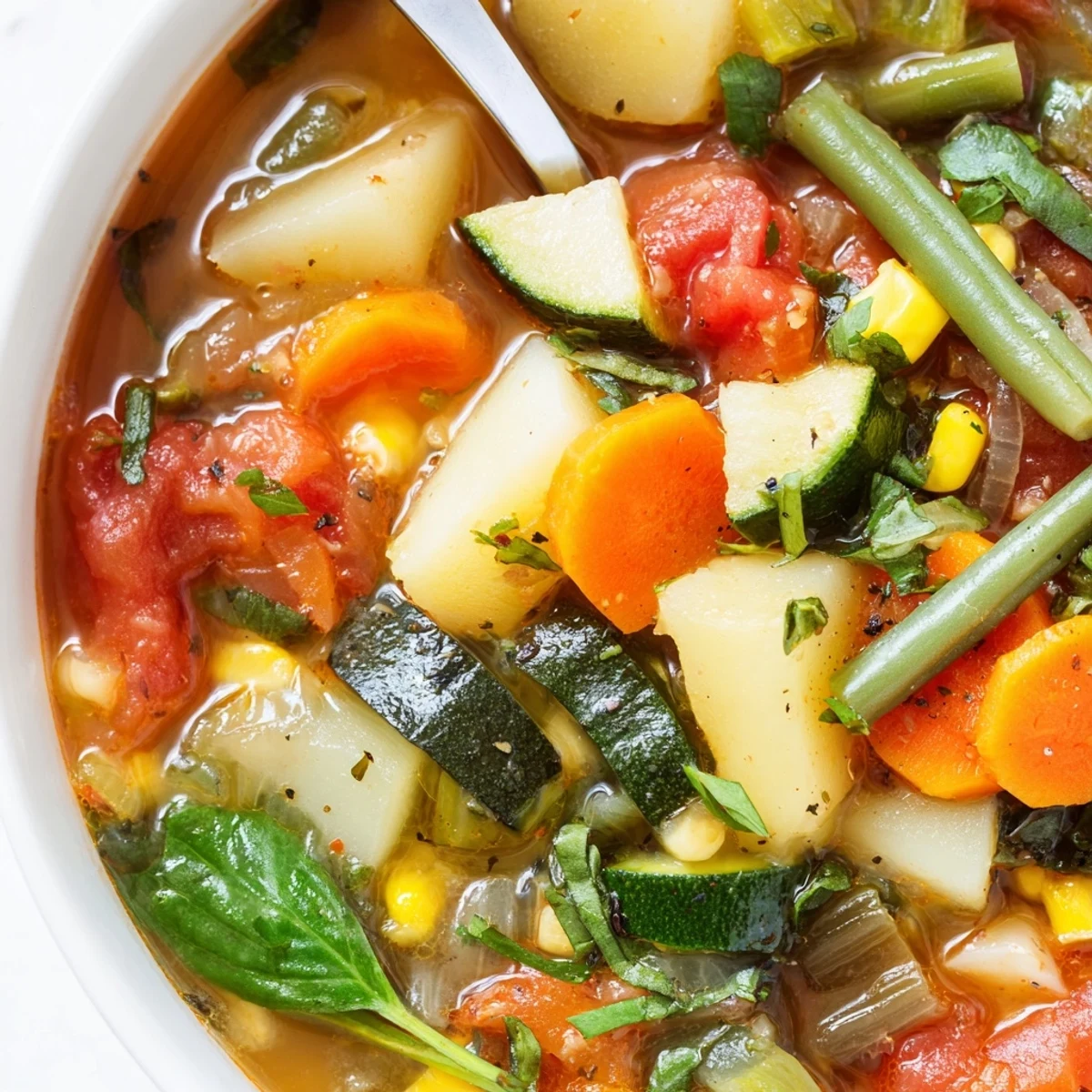
 This hearty vegetable soup brings together onion, garlic, carrots, celery, potatoes, zucchini, green beans, corn and tomatoes simmered in six cups of seasoned broth. Sauté aromatics, add root vegetables, then remaining veg and broth; simmer until tender. Stir in spinach, finish with parsley, and serve hot. Serves four and is naturally vegan and gluten-free.
There is something about the sound of a wooden spoon scraping against the bottom of a heavy pot that makes a kitchen feel like home. One rainy Tuesday evening, with nothing planned and the fridge full of odds and ends, I started chopping vegetables with no real recipe in mind. What landed in the pot that night was the kind of soup that makes you close your eyes after the first spoonful. It has been on steady rotation ever since.
I made a massive batch of this for a neighbor who had just come home from the hospital, expecting to drop off a quick meal and leave. We ended up sitting at her kitchen table for two hours, bowls in hand, talking about everything except the surgery. She later told me it was the first thing that actually tasted good to her in weeks.
Ingredients
- Olive oil: Two tablespoons is enough to soften everything without making the soup greasy.
- Onion and garlic: The foundation of nearly every good soup, so never rush this step.
- Carrots and celery: Cut them roughly the same size so they cook evenly and look tidy in the bowl.
- Potatoes: They break down slightly and give the broth a natural, gentle thickness.
- Zucchini: Adds a soft sweetness and cooks quickly, so it goes in at the right moment.
- Green beans: Snap them into bite sized pieces and they practically melt into the broth.
- Corn kernels: Little bursts of sweetness that surprise you in every few spoonfuls.
- Diced tomatoes: Fresh in summer, canned in winter, both work beautifully here.
- Baby spinach: Stirred in at the very end so it wilts gently without turning muddy.
- Vegetable broth: Use a good quality one since it is the backbone of the entire pot.
- Dried thyme and basil: Simple herbs that make the kitchen smell like a countryside kitchen.
- BAY leaf: Just one does the job, and remember to fish it out before serving.
- Fresh parsley: Scattered on top at the end for a bright, clean finish.
Instructions
- Wake up the aromatics:
- Heat the olive oil in a large soup pot over medium heat and sauté the onion and garlic until softened and fragrant, about three minutes. Watch closely because garlic can turn from golden to bitter in seconds.
- Build the hearty base:
- Add the carrots, celery, and potatoes, stirring them around for about five minutes so they pick up a little color. This small step adds a depth you can actually taste later.
- Add the colorful vegetables:
- Stir in the zucchini, green beans, corn, and tomatoes, then pour in all six cups of broth. The pot will look gloriously full and vibrant at this stage.
- Season and simmer:
- Add the salt, pepper, thyme, basil, and bay leaf, then bring everything to a boil before reducing the heat to a gentle simmer. Let it bubble uncovered for twenty five to thirty minutes until every vegetable is tender.
- Finish with greens:
- Drop in the baby spinach and cook for just two more minutes until wilted, then remove and discard the bay leaf. Taste the broth and adjust the salt and pepper if needed.
- Serve with care:
- Ladle the hot soup into bowls and scatter fresh parsley over each portion. Serve immediately with something crusty on the side if you have it.
 Pin it
 My niece, who proudly announces at every family dinner that she hates vegetables, once ate three bowls of this without realizing what she was eating. I said nothing and just kept ladling.
Making It Your Own
Think of this recipe as a template rather than a rulebook. In autumn I toss in cubed butternut squash and a pinch of smoked paprika. Summer calls for fresh basil leaves stirred in at the end instead of dried.
Serving Suggestions
A thick slice of sourdough toasted with olive oil is really all this soup needs beside it. For a heavier meal, a scoop of cooked white beans or half a cup of small pasta turns it into something almost stew like and deeply satisfying.
Storing and Reheating
This soup keeps beautifully in the refrigerator for up to four days and actually tastes better on the second day when the flavors have had time to settle. It freezes well too, though the potatoes may soften slightly upon thawing.
- Let the soup cool completely before transferring to storage containers.
- Freeze in individual portions for easy weeknight lunches.
- Always label the container with the date so nothing gets lost in the back of the freezer.
 Pin it
 Some recipes earn their place in your kitchen through effort and precision, but this one earns it through simplicity and comfort. Keep it close, because you will reach for it more often than you think.
Recipe FAQs
- → Can I swap vegetables based on season?
-
Yes — this is very adaptable. Use any firm vegetables you have on hand: squash, leeks, parsnips or bell peppers work well. Adjust cooking times for denser roots versus quick-cooking greens.
- → How do I make the broth more flavorful?
-
Start by sweating the onion and garlic until soft to build a base. Add a parmesan rind while simmering for umami (remove before serving) or boost herbs with extra thyme and bay leaf. A splash of vinegar or lemon at the end brightens the broth.
- → How long does it keep and how should I store it?
-
Cool to room temperature, then refrigerate in a sealed container for 3–4 days. Reheat gently on the stovetop; add a little water or broth if it has thickened. For longer storage, freeze in portions for up to 3 months.
- → What are good additions for a heartier bowl?
-
Stir in cooked pasta, cooked beans, or diced cooked potatoes to increase heft. Add them near the end of reheating to avoid overcooking. A drizzle of olive oil or a sprinkle of toasted seeds adds texture.
- → How can I keep the vegetables from getting mushy?
-
Cut vegetables into uniform pieces and add them according to density: roots first, tender vegetables later. Simmer gently and check for doneness; remove from heat as soon as all pieces are tender but still hold shape.
- → Any tips for seasoning to taste?
-
Season in stages: season sautéed aromatics lightly, then again after adding the broth and vegetables. Finish with salt, pepper, and fresh parsley to brighten flavors. Taste and adjust acidity with a squeeze of lemon if needed.