
 Pin it
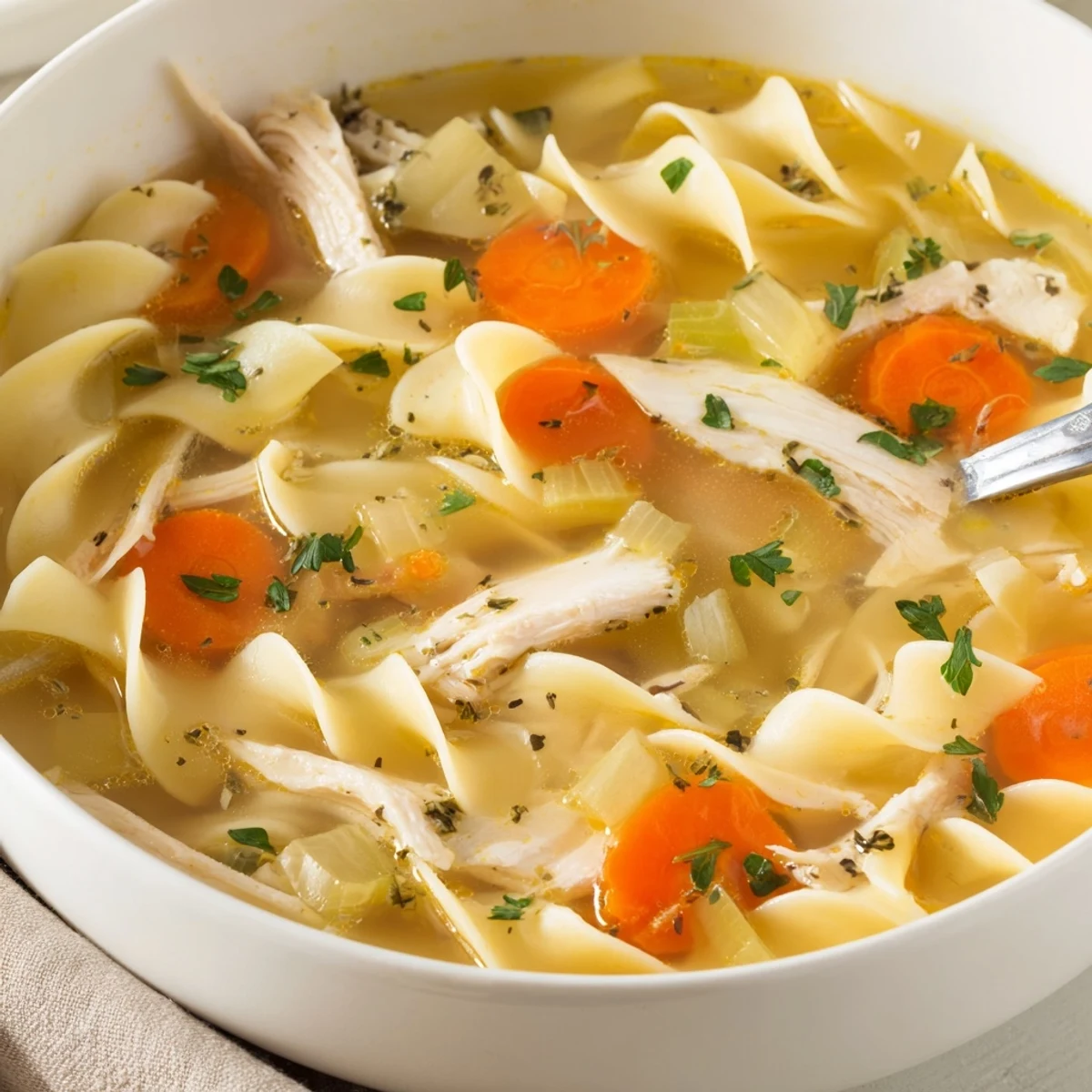
 Ready in about 50 minutes, this comforting chicken noodle soup combines sautéed onions, carrots and celery with garlic, bay leaf and thyme simmered in low-sodium chicken broth. Poached chicken is shredded and returned to the pot with egg noodles until tender. Tip: use bone-in pieces for deeper flavor, skim foam, and add lemon juice or fresh parsley to brighten before serving.
The screen door slammed shut behind me and the smell hit immediately: celery and onion sweating in butter, thyme curling through the steam like it owned the place. My grandmother stood at the stove in her faded blue apron, stirring a pot the size of a small bathtub. She never measured anything, just tossed and tasted, and somehow every bowl was perfect. That pot held more than soup, it held the entire philosophy that food could solve almost anything.
I made this for a friend who was going through a brutal breakup once, and she sat at my kitchen table crying into her bowl, then asked for seconds. That is the power of chicken noodle soup done right.
Ingredients
- Boneless skinless chicken breasts (about 400 g): Lean and quick to cook through, though thighs work if you prefer darker meat with more fat.
- Low sodium chicken broth (6 cups): Controlling the salt yourself matters because store bought broth can be aggressively salty once it reduces.
- Medium carrots (2, sliced): Cut them on a slight diagonal for more surface area and a prettier bowl.
- Celery stalks (2, sliced): The unsung hero that gives the broth its signature savory backbone.
- Small onion (1, diced): Yellow or white both work, just cook it until truly soft and translucent.
- Garlic cloves (2, minced): Add it after the other vegetables so it does not scorch and turn bitter.
- Egg noodles (150 g): Their slight chew and richness makes the soup feel substantial rather than watery.
- Bay leaf: One is enough, and please remember to fish it out before serving.
- Dried thyme (1 tsp): This is the quiet herb that ties everything together.
- Dried parsley, salt, and black pepper: Simple seasonings that let the ingredients speak.
- Fresh parsley (optional garnish): A handful chopped right before serving adds color and a fresh bite.
Instructions
- Build the vegetable base:
- Heat a splash of oil in a large pot over medium heat and add the diced onion, sliced carrots, and celery. Stir occasionally and listen for that soft sizzle, cooking until the onions turn translucent and the carrots just begin to soften, about 4 to 5 minutes. Toss in the minced garlic and stir for one more minute until your kitchen smells irresistible.
- Simmer the chicken:
- Pour in all six cups of broth and drop in the chicken breasts whole, along with the bay leaf, thyme, and dried parsley. Bring it to a gentle boil, then lower the heat until you see lazy bubbles rising here and there. Let it simmer uncovered for 20 to 25 minutes until the chicken is fully cooked through and tender when poked with a fork.
- Shred the chicken:
- Use tongs to lift the chicken breasts out of the broth and onto a cutting board. Let them rest for a minute so you do not burn your fingers, then use two forks to pull the meat apart into bite sized shreds. Set the chicken aside for now.
- Cook the noodles:
- Dump the egg noodles straight into the simmering broth and stir so they do not clump together. Let them cook for 7 to 8 minutes until tender but still have a slight chew, tasting one to be sure.
- Bring it all together:
- Slide the shredded chicken back into the pot and give everything a gentle stir. Season with salt and pepper, starting light and adding more as needed, and remove and discard the bay leaf.
- Serve and enjoy:
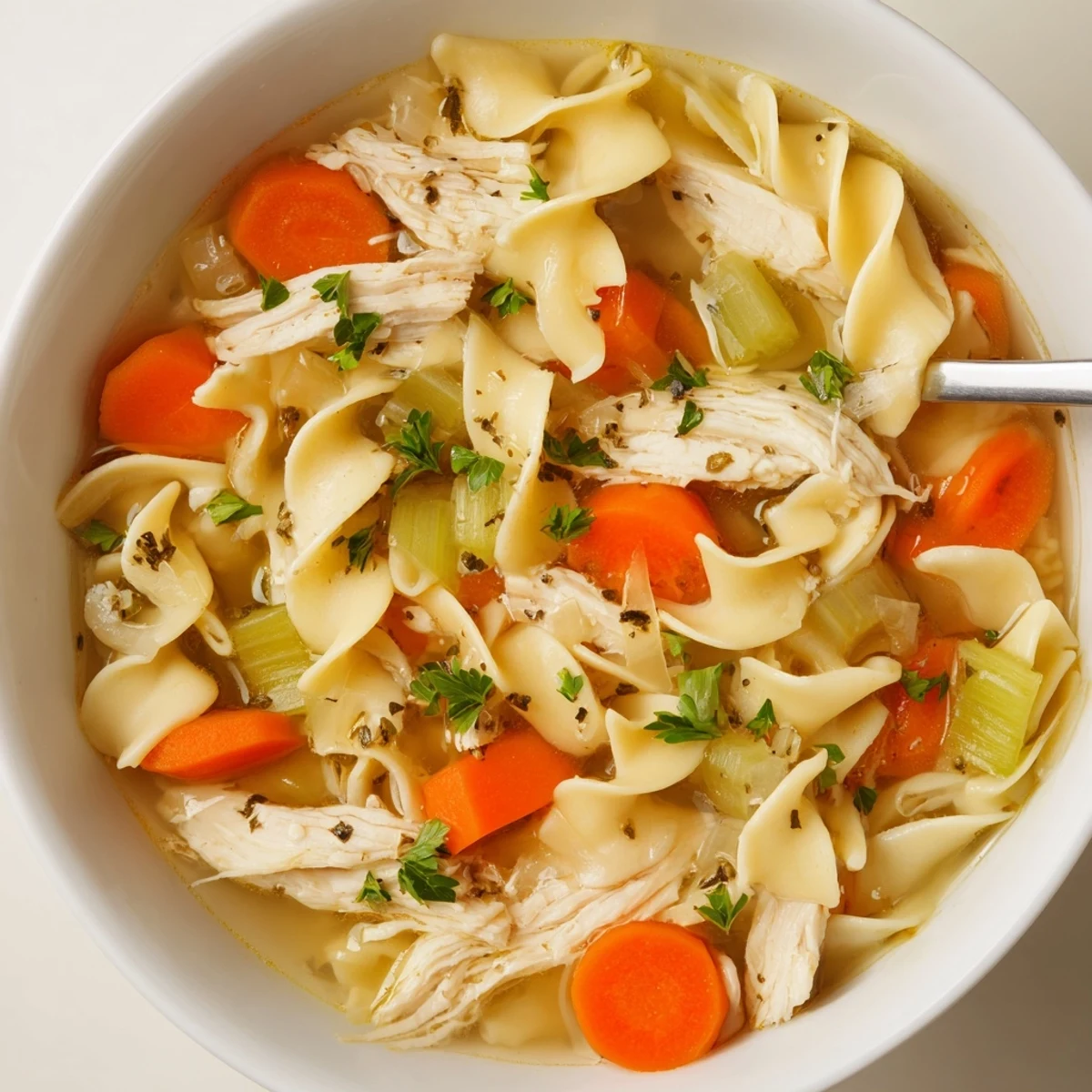
- Ladle the steaming soup into wide bowls and scatter fresh parsley over the top if you are feeling fancy. Serve it hot with crusty bread on the side for dipping.
 Pin it
 Soup has a way of turning an ordinary Tuesday into something that feels cared for, especially when the wind is rattling the windows and you are wrapped in a blanket at the table.
Tools That Make It Easier
A heavy bottomed pot distributes heat evenly so nothing scorches on the bottom while you are busy doing other things. A good ladle with a deep bowl saves you from messy spills when transferring soup to bowls. Keep a pair of tongs handy for pulling the chicken out cleanly.
Making It Your Own
Swap the egg noodles for rice or gluten free pasta if that suits your needs, and add a handful of frozen peas in the last two minutes for a pop of green. A pinch of turmeric gives the broth a gorgeous golden color without changing the flavor much.
Storing and Reheating
Let the soup cool completely before transferring it to airtight containers, and it will keep in the fridge for up to four days. For freezing, portion it into individual servings so you only thaw what you need, and know the noodles will soften further upon reheating. Warm it gently on the stove or in the microwave, adding a splash of broth or water if it has thickened overnight.
- Label your frozen containers with the date so nothing gets lost in the back of the freezer.
- Slightly undercooking noodles before freezing preserves their texture beautifully.
- Always taste and adjust seasoning after reheating, since cold dulls flavors.
 Pin it
 Every pot of this soup carries a little bit of home with it, no matter whose kitchen you are standing in. Ladle it up generously and let it do its quiet work.
Recipe FAQs
- → How do I keep the broth clear and flavorful?
-
Simmer gently rather than boiling and skim any foam that rises during the first 10–15 minutes. Use low-sodium broth to control seasoning and add aromatics like bay leaf and thyme for depth without clouding.
- → Can I use bone-in chicken instead of breasts?
-
Yes. Bone-in pieces add richer flavor; simmer a bit longer until meat pulls from the bone, remove and shred, then return to the pot. Strain or skim any excess fat for a cleaner finish.
- → How do I prevent the vegetables and noodles from getting mushy?
-
Cut vegetables into uniform pieces and sauté briefly to retain texture. Add noodles toward the end of cooking and follow package timing so they remain al dente rather than overcooked.
- → What are good substitutions for egg noodles for dietary needs?
-
Use gluten-free noodles, rice noodles, or small pasta shapes labeled gluten-free. Check labels for egg content if avoiding eggs, and adjust cooking times accordingly.
- → How should I store and reheat leftovers?
-
Refrigerate in an airtight container for 3–4 days. For freezing, omit noodles — freeze the broth and shredded chicken, then add fresh noodles when reheating to preserve texture. Reheat gently on the stove.
- → How can I brighten the final flavors?
-
Add a squeeze of lemon juice or a splash of vinegar and finish with chopped fresh parsley. Taste for salt and pepper after reheating to sharpen the flavors.