 Pin it
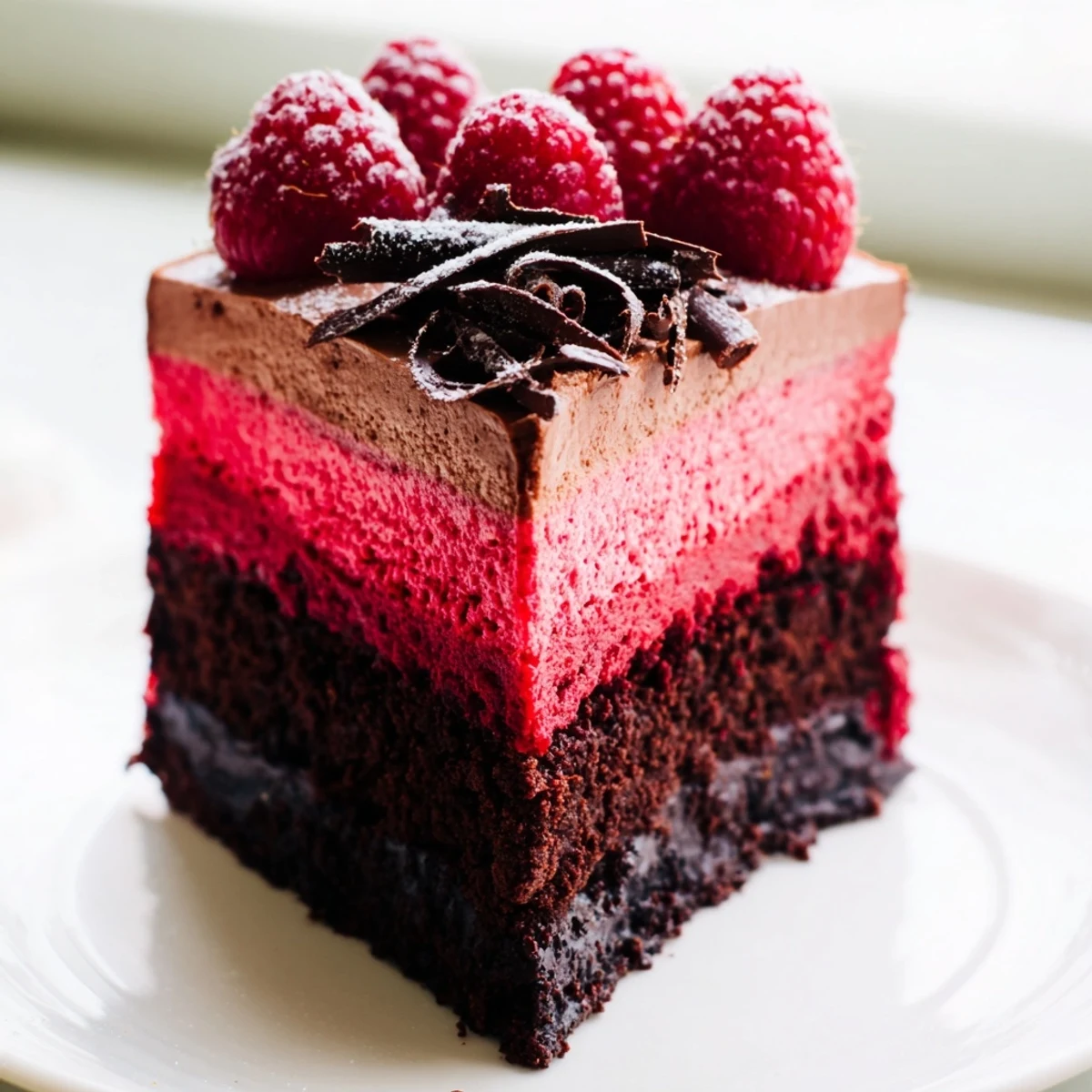
 This stunning multi-layered dessert combines a fudgy chocolate cake base with a bright, tangy raspberry filling and a cloud-like dark chocolate mousse on top.
Each layer complements the others — the richness of chocolate balanced by the fruity raspberry, all finished with an airy, silky mousse.
Plan ahead for chilling time, but the hands-on preparation is straightforward. Decorate with fresh berries and chocolate curls for a showstopping centerpiece.
The first time I attempted a layered mousse cake, I learned why patience matters in dessert making. I was hosting a dinner party and arrogantly thought I could assemble all three layers in one afternoon. By the time my guests arrived, the mousse was still gloriously soup, and we ended up eating something entirely different while the cake mocked me from the refrigerator. That failure taught me to respect the chilling time, and now I plan this cake a full day ahead.
Last Valentines Day, I made this for someone who claimed they didnt like dessert. They took one bite, eyes widened, and proceeded to eat three slices while explaining at length why chocolate and raspberry should always be together. Watching that skeptical expression melt away made every minute of gelatin-wrangling and egg-separating completely worth it.
Ingredients
- All-purpose flour (75 g): Creates a tender cake base that can support the weight of mousse without becoming tough or dense
- Unsweetened cocoa powder (25 g): Dutch-processed gives the deepest color and most sophisticated chocolate flavor
- Granulated sugar (100 g for cake, 50 g for raspberry layer, 50 g for mousse): Precision matters here—too little and the cake wont set properly, too much masks the berries
- Large eggs (5 total, separated for mousse): Room temperature eggs incorporate better and create more volume when whipped
- Unsalted butter (60 g, melted): Use high-quality butter since its flavor will be noticeable in the finished cake
- Vanilla extract (1 tsp for cake, 1 tsp for mousse): Pure vanilla extract makes a difference you can taste
- Baking powder (1/2 tsp): Just enough lift to keep the cake layer light
- Salt (2 pinches): Enhances chocolate flavor and balances sweetness
- Fresh or frozen raspberries (300 g): Frozen work perfectly and often release more juice during cooking
- Water (2 tbsp): Helps raspberries break down and prevents scorching
- Gelatin sheets (2) or powdered gelatin (1½ tsp): Sheets dissolve more evenly but powder works fine if bloomed properly
- Dark chocolate (200 g, 60–70% cacao): Higher percentage prevents the mousse from being cloyingly sweet
- Heavy cream (250 ml, cold): Must be thoroughly chilled—warm cream wont whip properly
- Fresh raspberries (100 g) for decoration: Room temperature berries have more flavor and look glossier
- Shaved dark chocolate: Use a vegetable peeler on a room temperature chocolate bar for perfect curls
Instructions
- Prepare the oven and pan:
- Preheat to 175°C (350°F) and line a 20-cm springform pan with parchment paper, greasing the sides lightly.
- Mix the dry ingredients:
- Whisk together flour, cocoa powder, baking powder, sugar, and salt in a medium bowl.
- Combine wet ingredients:
- In another bowl, whisk eggs thoroughly with melted butter and vanilla until smooth.
- Form the cake batter:
- Pour wet into dry and fold gently just until combined—overmixing makes the cake tough.
- Bake the base:
- Spread batter evenly in the prepared pan and bake for 20–25 minutes until a toothpick emerges clean.
- Cool completely:
- Let the cake cool in the pan on a wire rack, resisting the urge to remove it too soon.
- Soften the gelatin:
- Place sheets in cold water for 5–10 minutes, or sprinkle powdered gelatin over cold water to bloom.
- Cook the raspberries:
- Simmer berries with sugar and water until completely broken down, about 5 minutes.
- Strain the puree:
- Press the mixture through a fine sieve, discarding seeds—you should have about 200 ml smooth puree.
- Dissolve the gelatin:
- Warm the strained puree slightly and stir in the gelatin until completely dissolved.
- Add the raspberry layer:
- Cool puree to room temperature, then pour evenly over the cooled cake base and chill for 1 hour.
- Melt the chocolate:
- Use a water bath or microwave, stirring frequently, until smooth and slightly warm.
- Prepare the yolks:
- Beat yolks with 25 g sugar and vanilla until pale and thick, then stir in the melted chocolate.
- Whip the egg whites:
- In a clean bowl, beat whites with salt until soft peaks form, then gradually add remaining sugar to stiff peaks.
- Whip the cream:
- In a separate bowl, whip cold cream to soft peaks—it should hold its shape but still be流动.
- Combine mousse components:
- Fold whipped cream into chocolate mixture, then gently fold in egg whites until no white streaks remain.
- Assemble final layers:
- Pour mousse over the set raspberry layer, smooth the top, and chill for at least 4 hours.
- Decorate before serving:
- Release from pan, arrange fresh raspberries on top, and finish with chocolate curls and a light dusting of icing sugar.
 Pin it
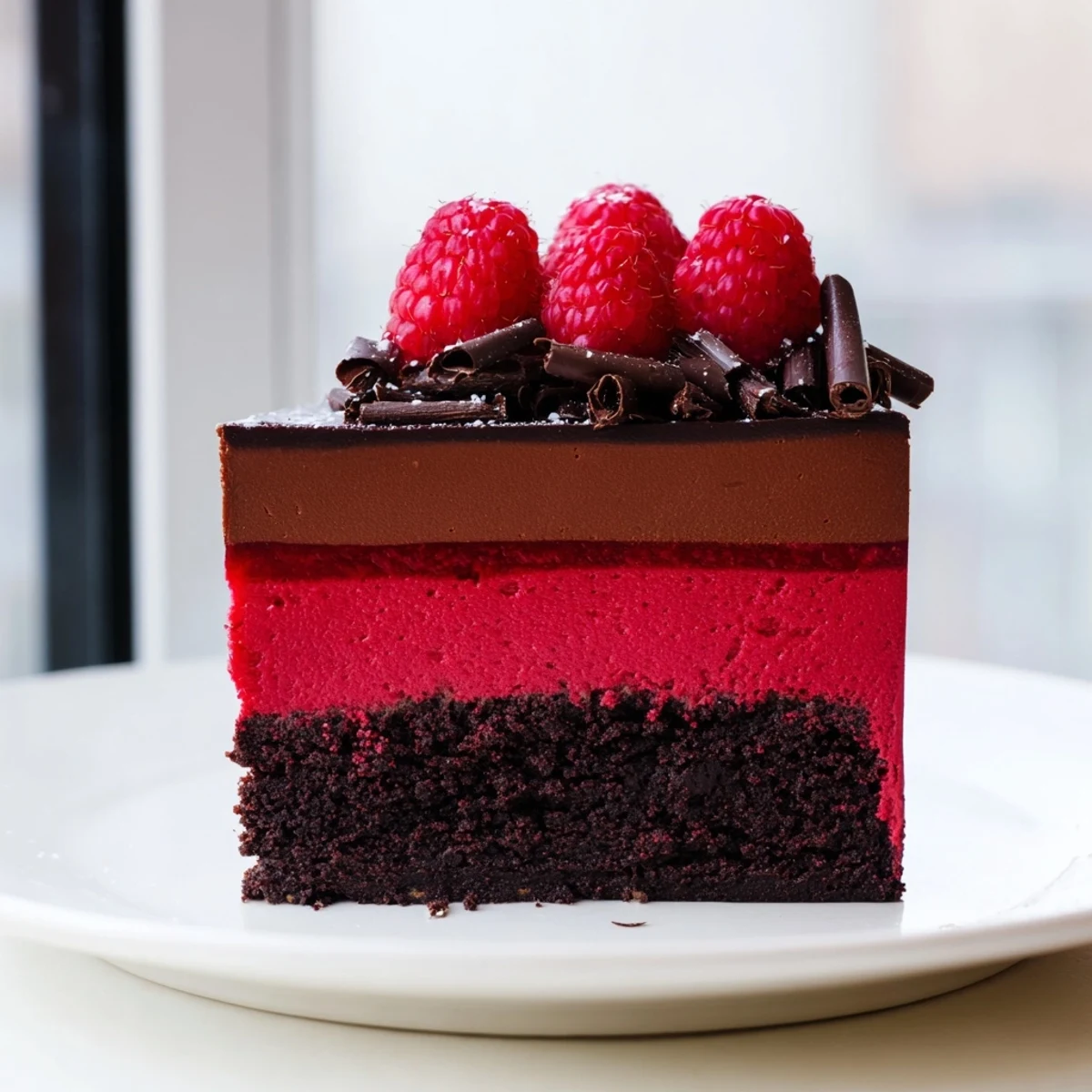
 This cake has become my go-to for celebrations because it tastes like something from a fancy patisserie but comes from my own kitchen. Theres something deeply satisfying about slicing through those distinct layers and hearing that soft sound when the knife hits the plate.
Getting the Layers Right
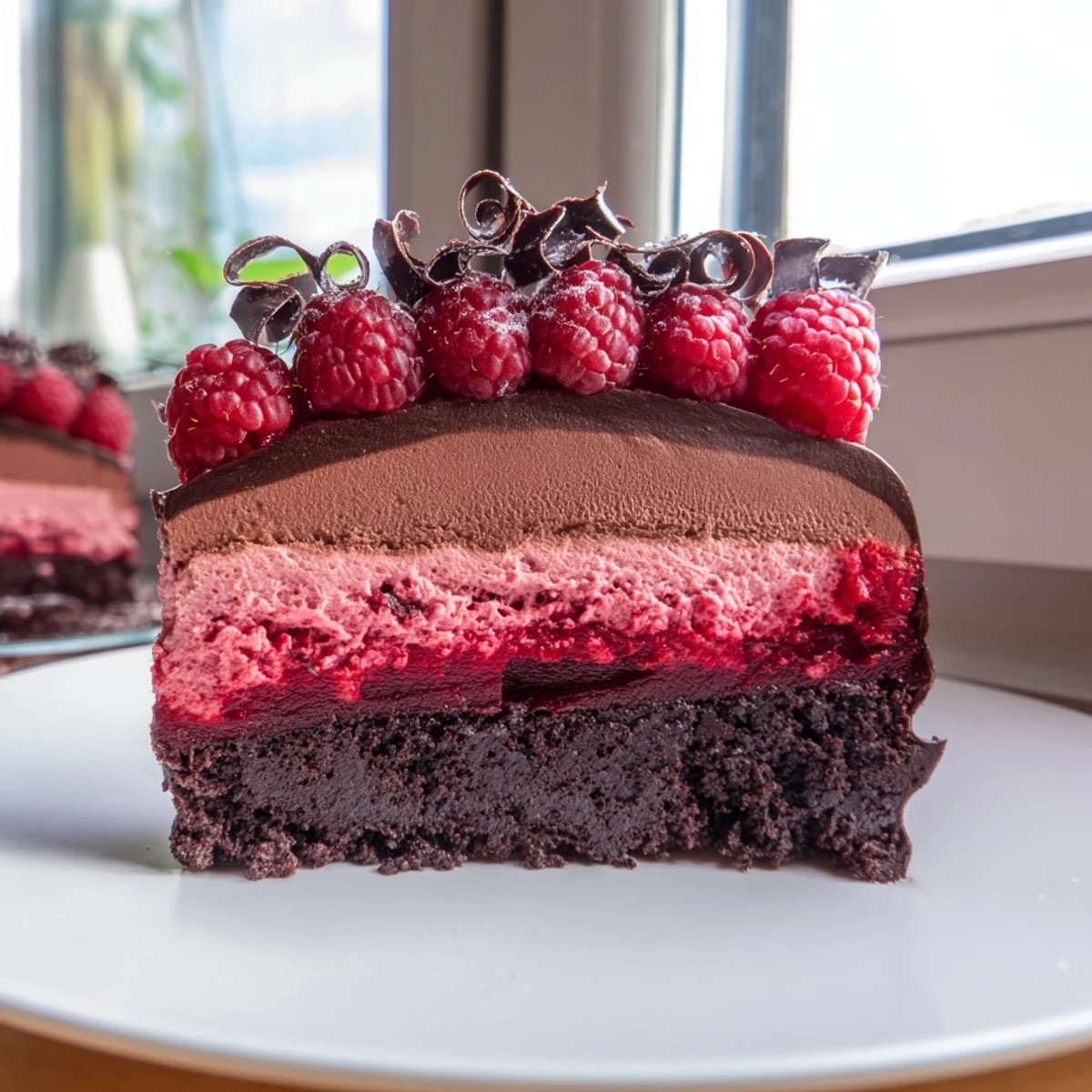
The most common mistake is adding layers before theyre properly set. I use the back of a spoon to test—if it leaves a clean mark, its ready. Rushing this step results in marbled layers instead of the clean striation that makes this cake so stunning. Also, pour each layer gently to avoid disturbing whats beneath.
Working with Gelatin
If youve never used sheet gelatin, its worth seeking out because it dissolves more reliably than powder. The key is squeezing out excess water after softening—any remaining liquid will dilute your raspberry layer and prevent proper setting. When warming the puree to dissolve gelatin, keep it just warm enough to melt, never boiling.
Making It Ahead
This cake actually improves after 24 hours in the refrigerator as flavors meld and texture settles. The mousse becomes firmer and easier to slice cleanly. Decorate with fresh berries and chocolate curls the same day you serve, since raspberries can weep and chocolate loses its shine over time.
- Serve this with a glass of raspberry liqueur or espresso to complement the richness
- For a gluten-free version, replace the flour with almond flour and add an extra egg
- Leftovers keep beautifully for 3 days if covered tightly in the refrigerator
 Pin it
 Every time I serve this, someone asks for the recipe, which is the highest compliment I can imagine as a home cook. Its the dessert that turned my kitchen into a place where real memories are made.
Recipe FAQs
- → Can I use frozen raspberries instead of fresh ones?
-
Yes, frozen raspberries work perfectly for the filling layer. Thaw them first and drain any excess liquid before cooking. Fresh raspberries are best reserved for the decoration on top.
- → How far in advance can I make this dessert?
-
You can prepare the entire cake up to 48 hours ahead. Keep it covered in the refrigerator. The flavors actually develop and improve after an overnight rest, making it ideal for dinner party planning.
- → What percentage of cacao should the dark chocolate have?
-
A 60–70% cacao dark chocolate gives the best balance of richness and sweetness. Anything above 70% can make the mousse too bitter, while lower percentages may result in an overly sweet layer.
- → How do I get clean slices when serving?
-
Dip a sharp knife in hot water and wipe it dry between each cut. The warmth helps the blade glide through the mousse cleanly. Chill the cake for the full recommended time to ensure it is properly set before slicing.
- → Can I substitute the gelatin with a plant-based alternative?
-
Agar-agar is a suitable substitute for gelatin in the raspberry layer. Use approximately 1 teaspoon of agar-agar powder dissolved in the warm puree. Note that agar-agar sets more firmly than gelatin, so the texture will be slightly different.
- → Why did my mousse deflate after folding?
-
Overmixing when folding in the whipped egg whites or cream is the most common cause. Fold gently using a spatula, cutting through the center and lifting from the bottom. Stop as soon as no white streaks remain — a few small patches are fine.