
 Pin it
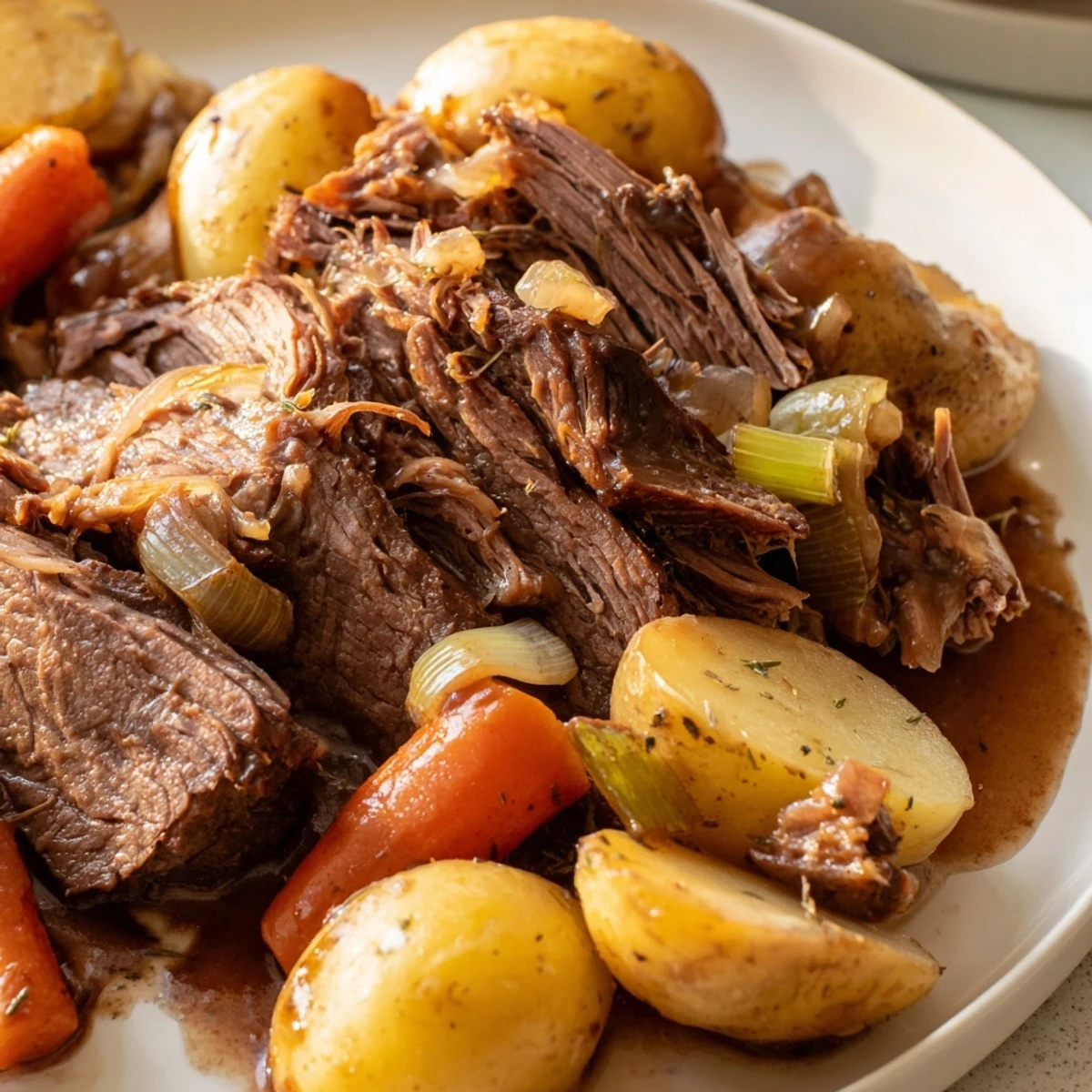
 This classic pot roast transforms a humble beef chuck into a fork-tender centerpiece by slow-cooking it low and slow in a Dutch oven. Searing the meat first builds a deep, caramelized crust, while the aromatic foundation of onions, carrots, celery, and garlic melts into a rich, savory broth.
Yukon gold potatoes soak up all the herby, wine-infused juices, and a touch of tomato paste adds body and depth to the pan sauce. Thyme, rosemary, and bay leaves weave warm, earthy flavors throughout.
Plan for about 3 hours of hands-off oven time, making this ideal for lazy weekend afternoons or holiday gatherings. Serve the sliced or shredded beef alongside the tender vegetables, spooning the concentrated pan juices over everything.
The smell of a pot roast in the oven is a kind of time travel that no photograph could ever replicate, transporting me straight to my grandmothers kitchen on a grey Sunday afternoon with rain tapping the window and absolutely nothing to do but wait for dinner.
One winter my furnace broke and I made this roast more out of stubbornness than planning, and the oven heat plus the aroma filled the house so thoroughly that my neighbor knocked on the door asking what I was cooking and ended up staying for dinner with a bottle of Cabernet.
Ingredients
- Beef chuck roast (3 to 4 lbs): Chuck is the cut for pot roast because its marbling breaks down over low slow heat into pure silk.
- Carrots (3 large): Cut them thick so they hold their shape and absorb flavor without turning to mush.
- Yukon gold potatoes (4 medium): Their buttery texture stands up to long cooking better than russets ever will.
- Celery (2 stalks): A quiet backbone of flavor that most people overlook until it is missing.
- Yellow onion (1 large): Slice it thick because those sweet caramelized ribbons become one of the best bites on the plate.
- Garlic (4 cloves, smashed): Smashed rather than minced so it melts into the sauce without burning.
- Beef broth (2 cups): Use a good quality gluten free broth if needed because it is the foundation of everything.
- Dry red wine (1 cup): Optional but it adds a depth you simply cannot get any other way.
- Tomato paste (2 tablespoons): This small spoonful concentrates the savory character of the entire dish.
- Kosher salt and black pepper: Season generously because the long cook will mellow everything.
- Dried thyme and rosemary (1 teaspoon each): Earthy herbs that perfume the broth without overpowering the beef.
- Bay leaves (2): Remember to fish them out before serving because nobody wants to bite into one.
- Olive oil (2 tablespoons): Just enough to get a proper sear on the meat.
Instructions
- Heat the oven:
- Set it to 325 degrees and let it come fully to temperature while you prepare the meat.
- Season and sear the roast:
- Pat the chuck dry with paper towels and season every surface with salt and pepper, then sear it in hot olive oil in your Dutch oven until each side carries a deep brown crust.
- Build the vegetable base:
- Remove the meat and sauté the onions, carrots, and celery in the same pot until they soften and pick up color, then stir in the garlic and tomato paste for one fragrant minute.
- Deglaze with wine:
- Pour in the red wine and scrape up every last brown bit from the bottom because that fond is concentrated flavor you do not want to leave behind.
- Bring it all together:
- Nestle the roast back in, tuck the potatoes, thyme, rosemary, and bay leaves around it, and pour the broth until it reaches halfway up the sides of the meat.
- Braise low and slow:
- Cover with a tight lid, slide it into the oven, and let it cook undisturbed for two and a half to three hours until a fork slides through the beef like warm butter.
- Finish and serve:
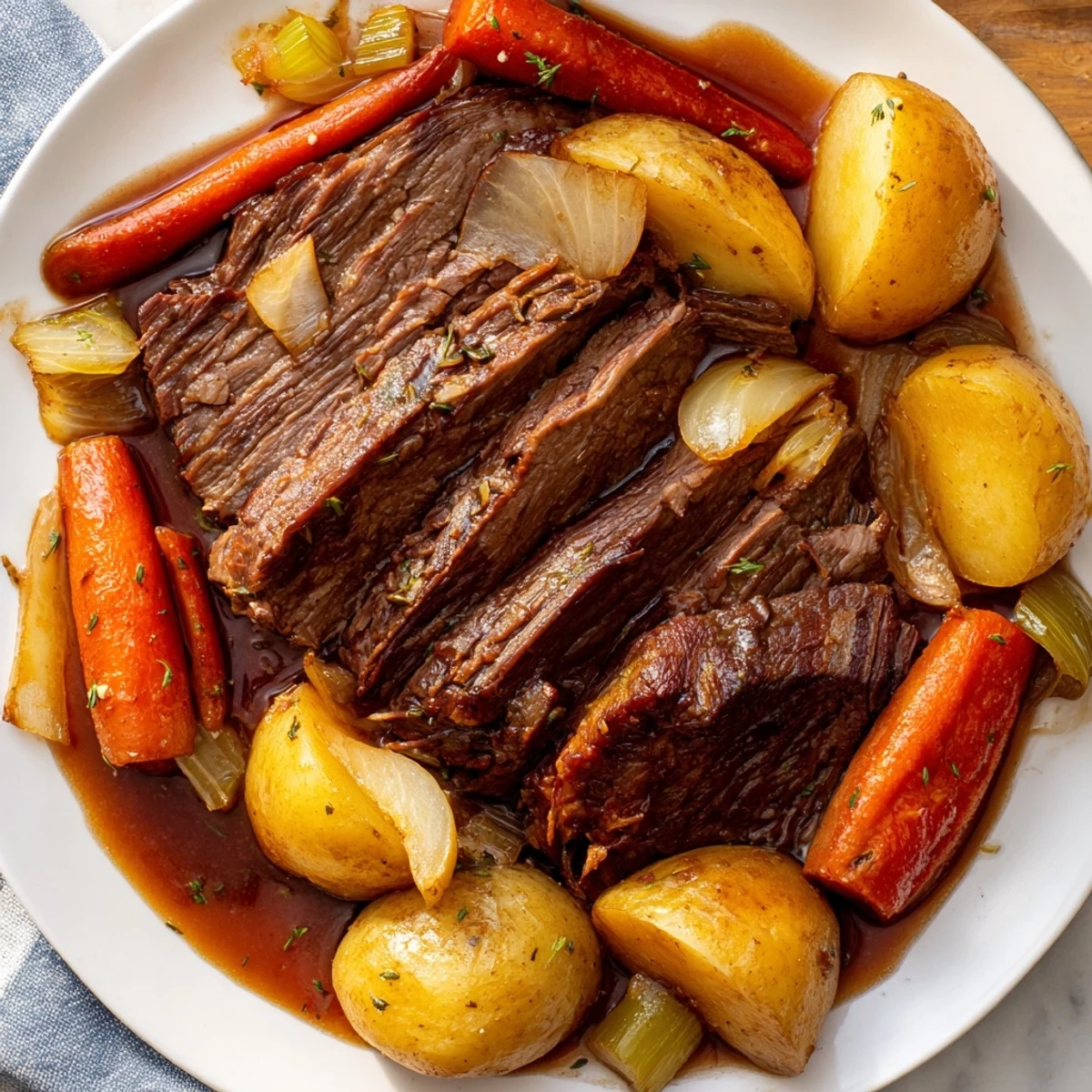
- Discard the bay leaves, skim the excess fat from the pan juices, and serve the sliced or shredded beef draped over the vegetables with plenty of that sauce spooned on top.
 Pin it
 The first time I served this to my family my father in law went quiet after his first bite and I panicked for a moment thinking something was wrong until he simply said this is exactly how my mother used to make it.
Picking the Right Cut of Beef
Chuck roast is traditional for good reason, but bottom round or brisket will also work if that is what you have available. The key is choosing a cut with enough connective tissue and fat to break down during the braise because lean cuts will dry out no matter how much liquid you add.
Making the Sauce Your Own
If the pan juices feel too thin after cooking, set the pot on the stove over medium heat and whisk in a slurry of one tablespoon cornstarch and two tablespoons cold water until it reaches the consistency you like. Adding a handful of mushrooms or parsnips during the last hour of cooking is a simple way to stretch the meal and introduce even more layers of flavor.
What to Serve Alongside
Crusty bread is essential for soaking up the juices and honestly might be the best part of the entire meal. A glass of the same red wine you used for deglazing ties everything together beautifully.
- Warm dinner rolls or a rustic sourdough loaf make the ideal vehicle for every drop of sauce.
- A simple green salad with vinaigrette cuts through the richness and balances the plate.
- Leftovers tucked into a sandwich the next day with horseradish cream might be better than the original dinner.
 Pin it
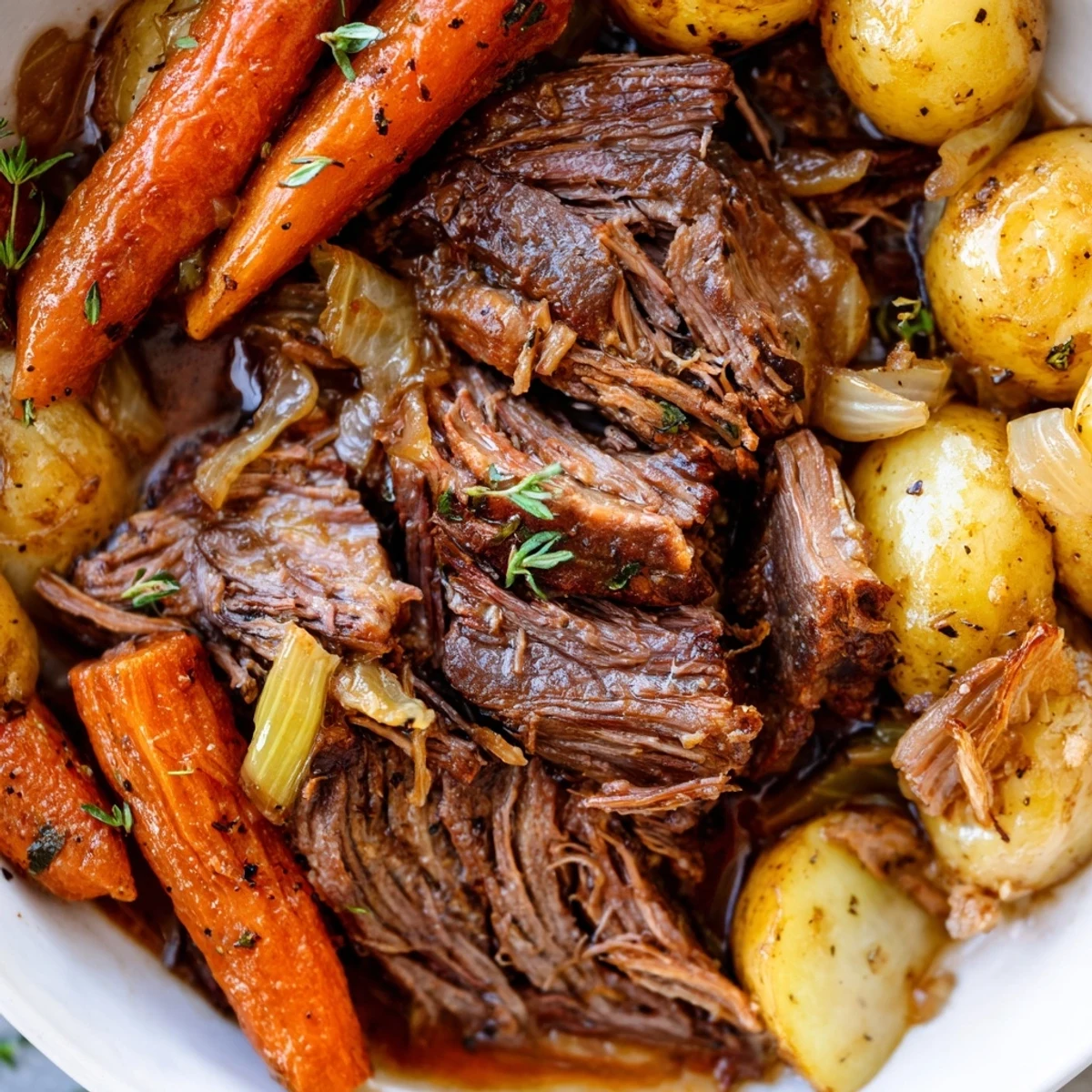
 Some recipes are just dinner and some are the reason people gather around a table and stay a little longer than planned, and this pot roast has always been the second kind for me.
Recipe FAQs
- → What cut of beef works best for pot roast?
-
Beef chuck roast is the ideal choice. Its generous marbling and connective tissue break down during the long, slow cooking process, resulting in exceptionally tender, flavorful meat that practically shreds itself.
- → Can I make pot roast without red wine?
-
Absolutely. Simply replace the wine with an equal amount of additional beef broth. The acidity from the tomato paste still provides balance, and the dish will taste every bit as rich and satisfying.
- → How do I know when the pot roast is done?
-
The roast is ready when it is fork-tender, meaning a fork slides in and out of the meat with almost no resistance. This typically takes 2.5 to 3 hours at 325°F. The internal temperature should reach around 200°F for optimal tenderness.
- → Can I add other vegetables to the pot?
-
Mushrooms and parsnips are excellent additions that complement the classic root vegetables. Add heartier vegetables at the same time as the potatoes, and if using mushrooms, stir them in during the last hour to prevent overcooking.
- → How should I store and reheat leftovers?
-
Store the beef and vegetables in an airtight container with the pan juices in the refrigerator for up to 4 days. Reheat gently on the stovetop over low heat or in the oven at 300°F until warmed through. The flavors actually improve the next day.
- → How can I thicken the pan juices into a gravy?
-
After removing the roast and vegetables, simmer the pan juices on the stovetop and whisk in a slurry of 1 tablespoon cornstarch mixed with 2 tablespoons cold water. Stir constantly for 2 to 3 minutes until the sauce coats the back of a spoon.