 Pin it
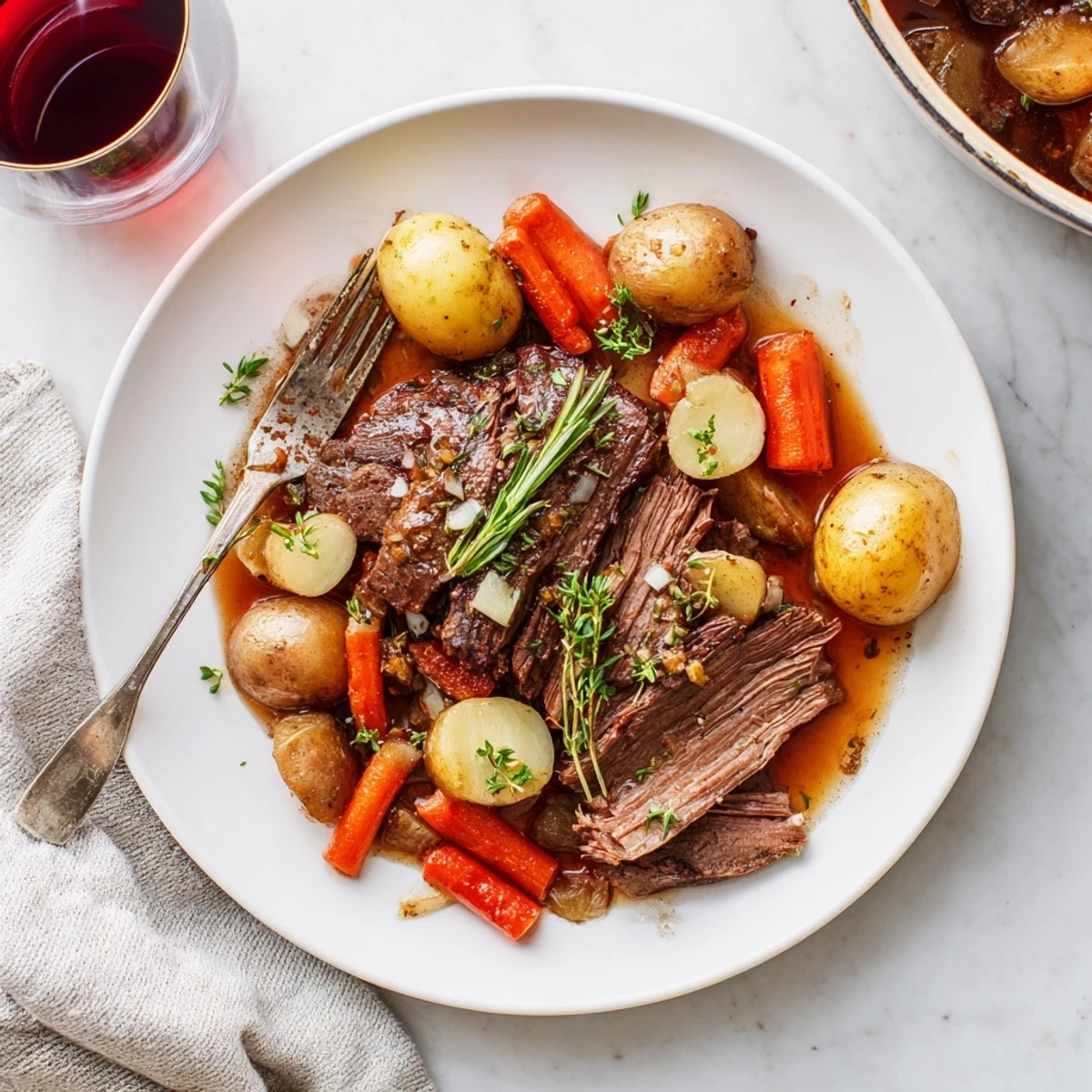
 This classic braised beef chuck roast transforms tough meat into meltingly tender perfection through slow cooking with fresh herbs, vegetables, and red wine. The process involves searing the roast to develop deep flavor, then simmering for three hours in a savory broth infused with thyme, rosemary, and bay leaves.
Root vegetables like carrots, onions, and celery cook alongside the meat, absorbing the rich braising liquid. The result is fork-tender beef with a deeply flavorful sauce that perfectly complements the meat. Ideal for making ahead—the flavors only improve overnight.
The house fills with this incredible aroma about an hour into cooking, that deep rich smell of beef and herbs that makes you actually pause whatever you're doing. My youngest walked in from school yesterday, took a deep breath through the nose, and immediately asked if we were having a special occasion dinner. Sometimes the best occasions are just Tuesday.
I first made this for a Sunday dinner when my parents were visiting, and my dad actually went quiet for a full minute after taking his first bite. That man never goes quiet. He said it reminded him of the Sunday roasts his grandmother used to make, back when Sunday dinners were an event and nobody checked their phones at the table.
Ingredients
- Beef chuck roast: Chuck roast has perfect marbling for slow cooking, breaking down into silky tenderness while keeping incredible flavor. A 3 to 4 pound roast feeds six people generously with leftovers.
- Kosher salt: The coarse flakes stick better to meat and distribute seasoning more evenly than table salt.
- Yellow onions: These become the sweet foundation of your braising liquid, melting into the sauce as they cook down.
- Carrots: Choose thick carrots, they hold their shape better during long cooking and add natural sweetness.
- Celery: Provides that aromatic base note that makes everything taste more like a proper braise.
- Garlic: Fresh minced garlic blooms in the hot fat, perfuming the entire pot.
- Olive oil: You need a fat with a high smoke point for searing, olive oil adds flavor too.
- Beef broth: Use a good quality broth or stock, it reduces down and concentrates during cooking.
- Dry red wine: Any drinkable red works, Cabernet or Merlot adds that backbone of flavor.
- Tomato paste: This small addition adds depth and richness, almost imperceptible but essential.
- Bay leaves: Throw these in whole, they add that classic savory note everyone recognizes but cannot name.
- Fresh thyme: Woody herbs stand up to long cooking better than delicate leafy herbs.
- Fresh rosemary: A little goes a long way, rosemary has a piney brightness that cuts through the richness.
- Baby potatoes: Optional but recommended, they soak up all that braising liquid and become impossibly creamy.
Instructions
- Get your oven ready and season the meat:
- Preheat your oven to 325°F and pat the chuck roast completely dry with paper towels. Rub it all over with the salt and pepper, pressing gently so it adheres.
- Sear the roast to build flavor:
- Heat olive oil in your Dutch oven over medium-high heat until it shimmers. Sear the roast on every side until you have a dark crust, about 3 to 4 minutes per side, then set it aside on a plate.
- Build your aromatic base:
- Add the onions, carrots, and celery to the hot pot, stirring to coat in the rendered fat. Cook for 6 to 8 minutes until they soften and take on some golden color, then add the garlic for just 1 minute until fragrant.
- De glaze and deepen the sauce:
- Stir in the tomato paste and let it cook for a minute to caramelize slightly. Pour in the wine and use your wooden spoon to scrape up all those flavorful browned bits from the bottom, letting it bubble for 2 to 3 minutes.
- Assemble everything for the long cook:
- Add the beef broth, bay leaves, thyme, and rosemary, then return the roast to the pot along with any juices on the plate. Nestle the baby potatoes around the meat if you are using them.
- Braise low and slow:
- Bring everything to a simmer on the stovetop, then cover tightly and transfer to the oven. Let it braise undisturbed for 3 hours, opening once or twice to baste the meat with the pan juices.
- Rest before serving:
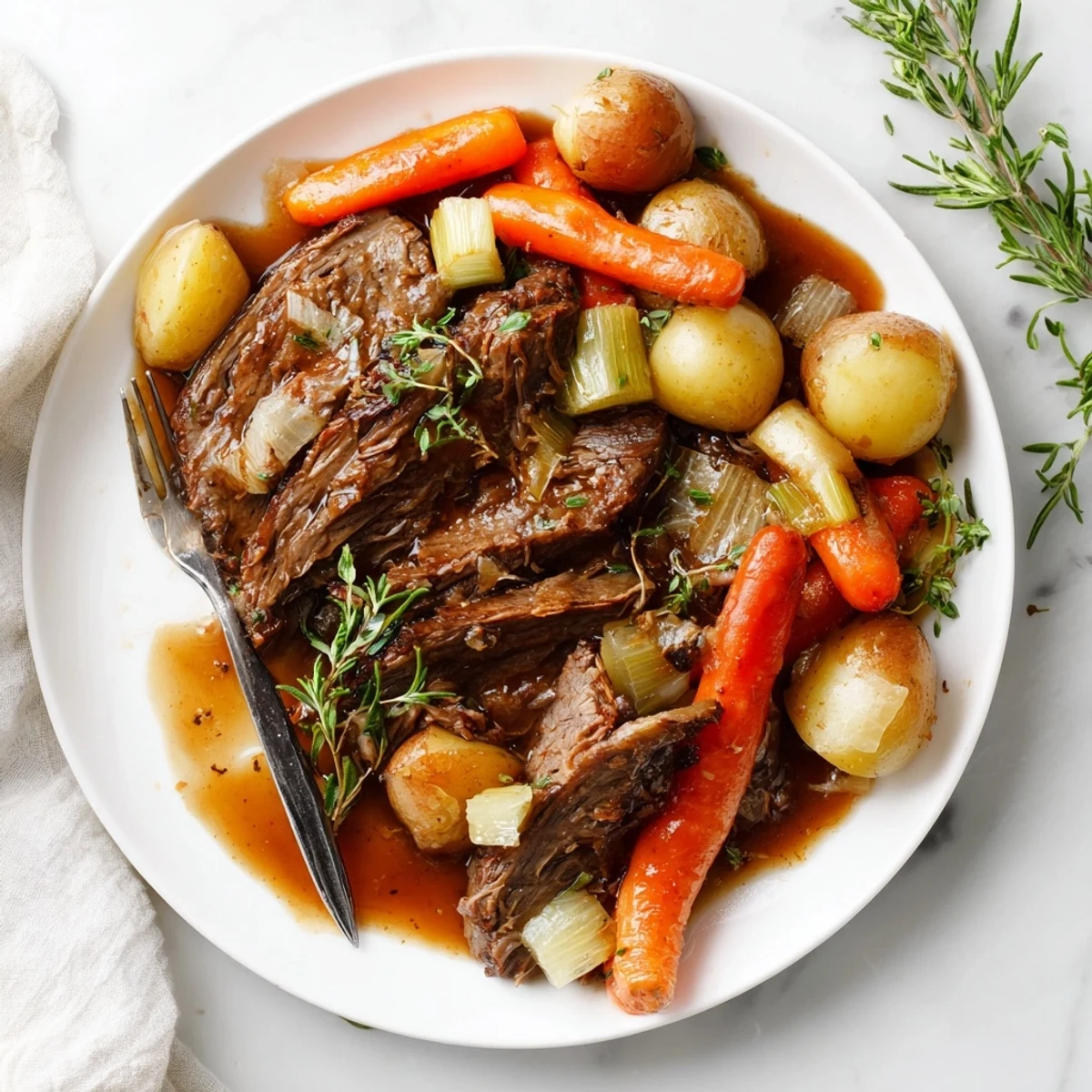
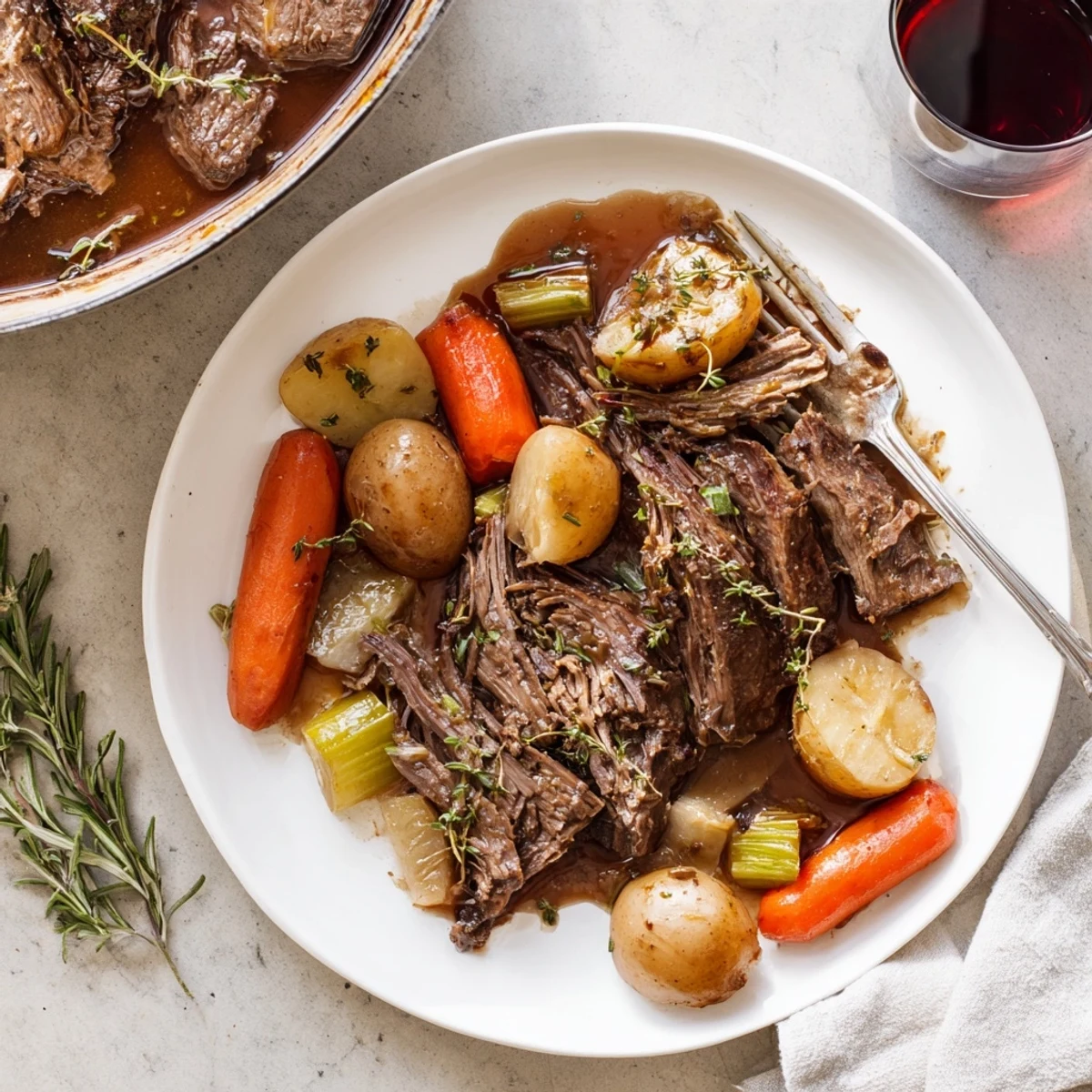
- Fish out and discard the bay leaves and herb sprigs. Let the roast rest for 10 minutes on a cutting board before slicing or shredding, then serve with the vegetables and plenty of that braising spooned over everything.
 Pin it
 Last winter I made this during a snowstorm when we were all stuck inside, something about the smell of braising beef feels like a hug when it is cold out. We ate it standing up in the kitchen, too hungry to wait for the table, pulling apart tender beef with forks and dipping hunks of bread into the sauce.
Making It Your Own
Once you have the basic method down, this recipe adapts beautifully to whatever you have on hand. Swap parsnips or turnips for some of the carrots if you like earthier flavors, or throw in some pearl onions instead of the yellow ones for something sweeter.
What To Serve With It
Mashed potatoes are classic for a reason, they are perfect for catching all that sauce. I also love creamy polenta when I want something different, or just crusty bread for sopping up every last drop of the braising liquid.
Getting The Best Results Every Time
A heavy Dutch oven really matters here, it holds heat evenly and keeps the moisture in. If you want a thicker sauce, pull out the meat and vegetables when they are done and simmer the liquid on the stove until it coats the back of a spoon.
- Let the roast come to room temperature for about 30 minutes before searing for more even cooking
- Use tongs to turn the meat so you do not pierce it and lose those precious juices
- The braising liquid will look thin at first but thickens beautifully as it reduces
 Pin it
 There is something deeply satisfying about a dish that rewards patience with such incredible flavor. Hope this becomes one of those recipes you turn to again and again.
Recipe FAQs
- → What cut of beef works best for braising?
-
Chuck roast is ideal for braising due to its marbling and connective tissue. The long cooking time breaks down these tissues, resulting in incredibly tender meat. Other suitable cuts include brisket or short ribs.
- → Can I make this on the stovetop instead of the oven?
-
Yes, maintain a gentle simmer on the lowest burner setting. Use a heat diffuser if available to prevent hot spots. Check liquid levels periodically and add more broth if needed to prevent drying.
- → What wine pairs best with this dish?
-
Cabernet Sauvignon, Merlot, or Pinot Noir work beautifully. Choose a dry red wine you'd enjoy drinking, as its flavor will concentrate during cooking. The same wine can be served alongside the finished dish.
- → How do I store and reheat leftovers?
-
Refrigerate for up to 4 days or freeze for 3 months. Reheat gently in a covered pan with a splash of beef broth. The sauce may have thickened when cold, so add liquid as needed while warming.
- → Can I add potatoes during cooking?
-
Absolutely. Add baby potatoes halved during the last 90 minutes of braising so they don't become mushy. They'll absorb the flavorful cooking liquid and make this a complete one-pot meal.
- → How do I thicken the braising sauce?
-
After removing the meat, simmer the liquid uncovered until reduced by about one-third. For a thicker consistency, whisk together 1 tablespoon of butter and 1 tablespoon of flour, then stir into the simmering sauce.