
 Pin it
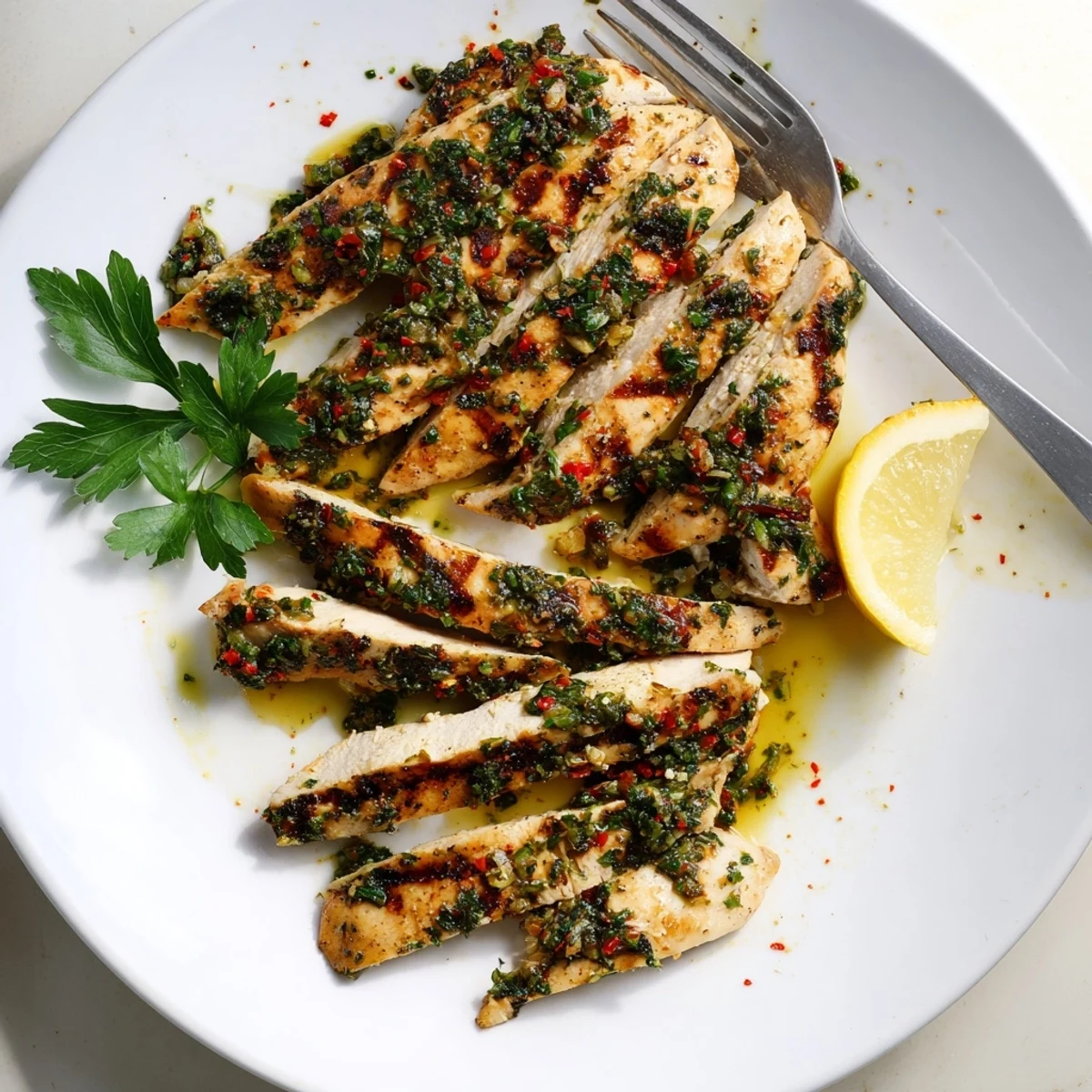
 Bright chimichurri of parsley, garlic, vinegar and oil seasons boneless chicken breasts. After at least an hour to develop flavor, grill over medium-high heat 6–8 minutes per side until internal temperature reaches 165°F, then rest 5 minutes. Reserve some sauce for finishing and serve with grilled vegetables or rice for a herb-forward, smoky main.
Smoke curled up from the backyard grill on a muggy July evening while my neighbor Andres leaned over the fence and asked what smelled so good. That was the night chimichurri chicken earned a permanent spot in my summer rotation. The green sauce was so good I kept sneaking spoonfuls straight from the bowl before the chicken even hit the grate. Something about sharp vinegar and fresh herbs meeting fire turns ordinary chicken into something worth lingering over.
I brought a platter of this to a potluck last August and watched three people ignore everything else on the table to go back for seconds. My friend Elena pulled me aside to ask for the recipe before the night was over. Now she makes it every Sunday and texts me photos.
Ingredients
- 4 boneless skinless chicken breasts (about 600 g): Pound them to even thickness so they cook uniformly on the grill without drying out.
- 2 tbsp olive oil: A light coating on the chicken helps the marinade adhere and creates better grill marks.
- 1 tsp kosher salt and 1/2 tsp black pepper: Season simply because the chimichurri carries the flavor.
- 1 cup fresh flat leaf parsley finely chopped: This is the backbone of the sauce so use the freshest bunch you can find and skip the curly stuff.
- 1/4 cup fresh cilantro finely chopped (optional): Adds a brightness that some people love but the recipe works beautifully without it.
- 4 garlic cloves minced: Do not skimp here because raw garlic is what gives chimichurri its unforgettable punch.
- 2 tbsp red wine vinegar: The acidity balances the oil and wakes up every herb in the bowl.
- 1/2 cup extra virgin olive oil: Use a decent one since this is the base of the sauce and you will taste the difference.
- 1 tsp dried oregano: It rehydrates in the vinegar and oil to add an earthy depth that fresh oregano sometimes lacks.
- 1/2 tsp red pepper flakes: Adjust up or down depending on how much warmth you want in the background.
- Juice of half a lemon (about 2 tbsp): A final hit of citrus brightness that pulls everything together right at the end.
Instructions
- Build the chimichurri:
- Pile the parsley, cilantro, garlic, vinegar, olive oil, oregano, red pepper flakes, salt, pepper, and lemon juice into a bowl and stir until the herbs are swimming in a fragrant green pool. Taste it on a cracker and adjust the salt or vinegar until it sings.
- Set aside the finishing sauce:
- Scoop out about a third of a cup into a separate container and stash it in the fridge because this is the sauce you will drizzle over the finished chicken. Never reuse marinade that has touched raw meat so this reserved portion keeps things safe.
- Marinate the chicken:
- Place the chicken breasts in a resealable bag or shallow dish, pour the remaining chimichurri and olive oil over them, and massage everything around until every piece is coated. Let them rest in the refrigerator for at least one hour or up to eight hours for deeper flavor.
- Get the grill ripping hot:
- Preheat your grill or grill pan to medium high heat so the chicken gets a good char on contact rather than steaming. Remove the chicken from the marinade, shake off the excess, and let any loose herbs fall away so they do not burn.
- Grill to juicy perfection:
- Lay the chicken on the grate and cook for six to eight minutes per side without fussing with it too much. The internal temperature should hit 165 degrees Fahrenheit and the juices should run clear when you press the thickest part.
- Rest and finish:
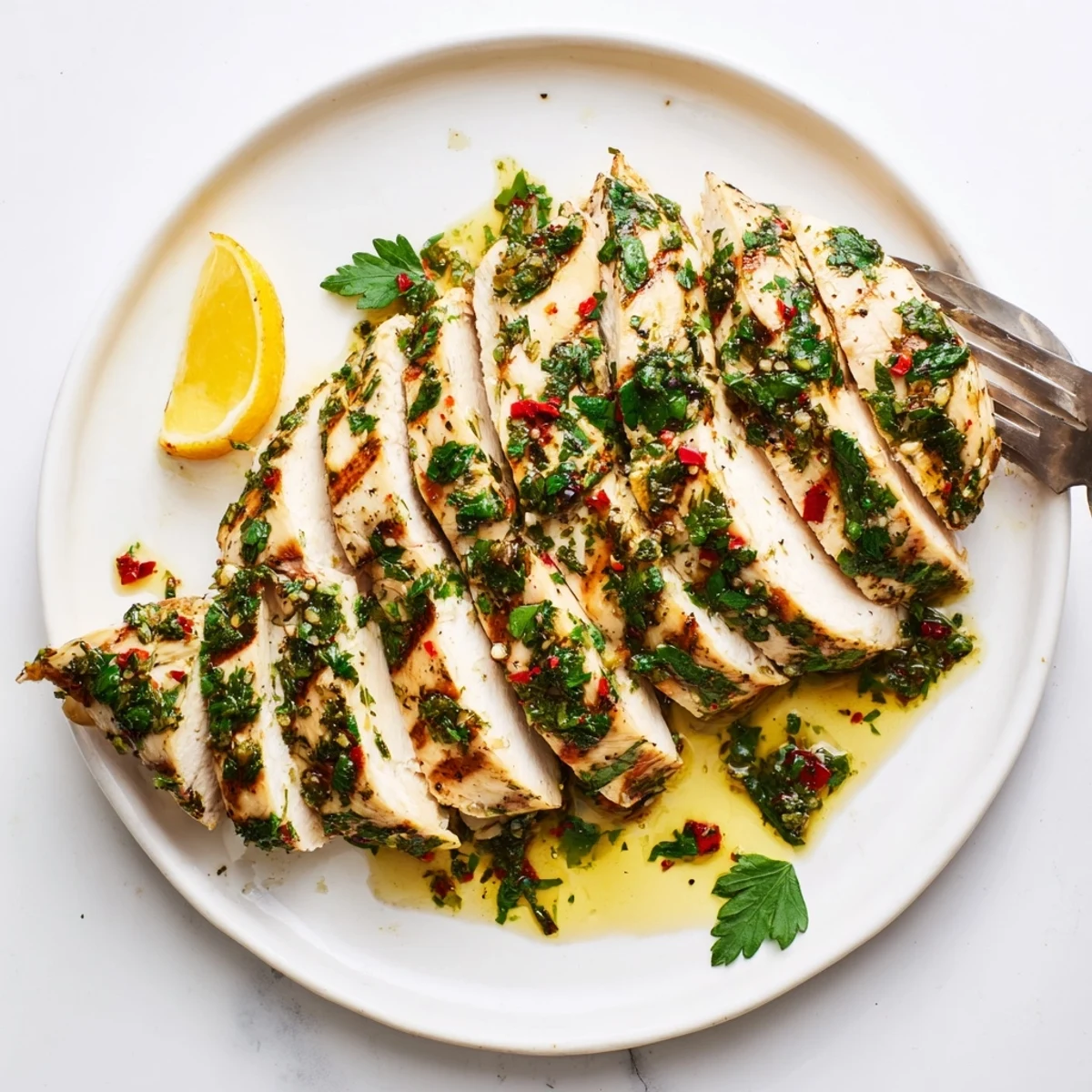
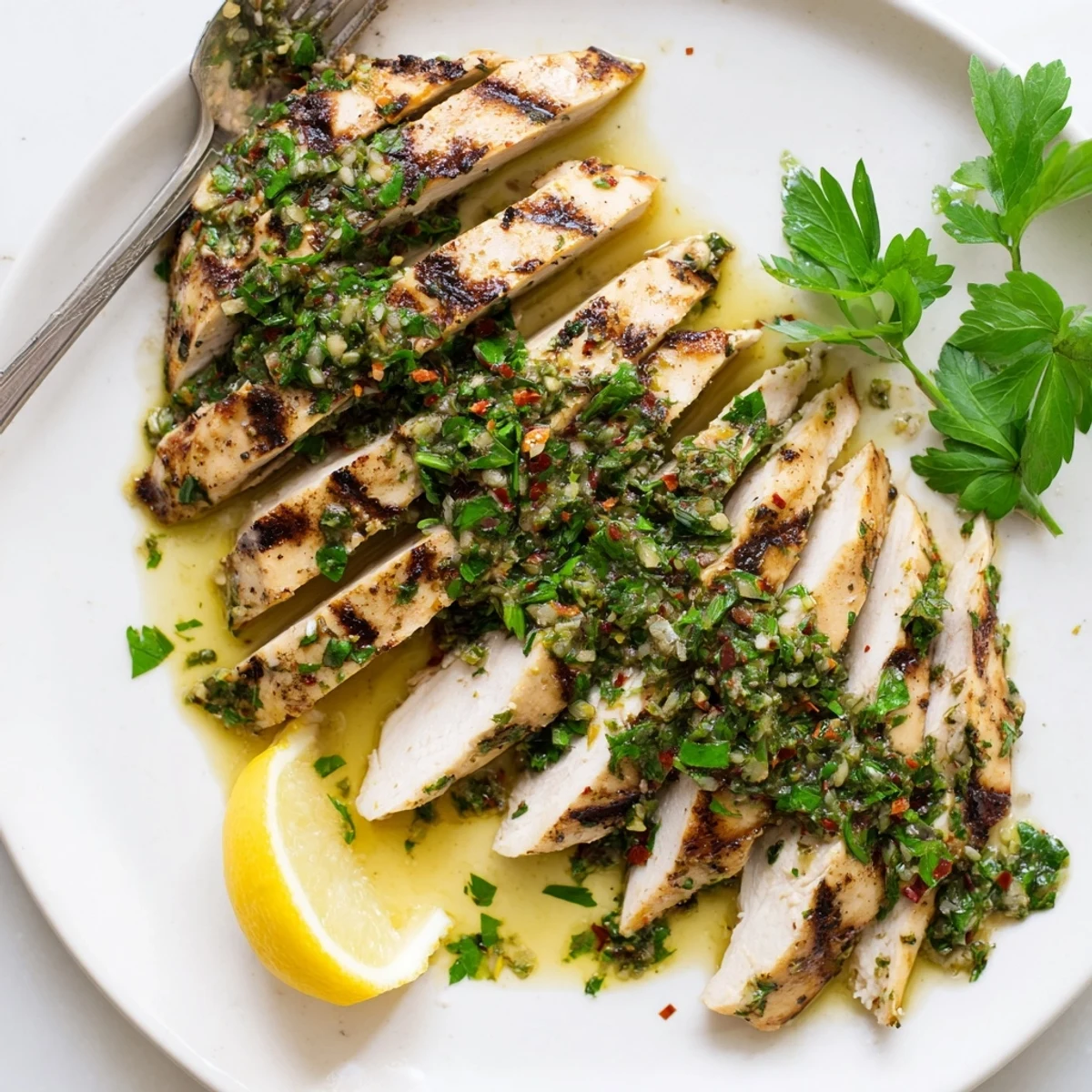
- Transfer the chicken to a cutting board and let it rest for five minutes so the juices redistribute instead of spilling onto the plate. Slice and drizzle generously with the reserved chimichurri before serving.
 Pin it
 Andres now brings over a bottle of malbec every time I fire up the grill, and we eat this chicken standing in the backyard with paper plates balanced on our knees. It has become the unofficial dish of our block.
Swaps and Shortcuts
Chicken thighs work beautifully here if you prefer darker meat that stays extra moist. I have also tossed the chimichurri with shrimp when I wanted something faster, and it was gone in minutes. For a smoother sauce that clings to every bite, throw the ingredients into a blender for a few pulses.
What to Serve Alongside
Grilled zucchini and bell peppers are naturals because they cook on the same grate at the same time. A pile of fluffy white rice soaks up the extra chimichurri like a dream. Crusty bread is not strictly necessary but you will want something to mop the plate clean.
Making It Ahead
The chimichurri actually improves after sitting in the fridge for a day as the flavors meld and soften into something even more cohesive. You can marinate the chicken the night before and have dinner on the table in twenty minutes the next evening.
- Chimichurri keeps for up to five days refrigerated in a sealed jar.
- Freeze extra chimichurri in ice cube trays for quick weeknight flavor bombs.
- Always taste the chimichurri before serving because the salt and vinegar may need a small adjustment after resting.
 Pin it
 Some recipes earn their place in your kitchen through repetition, and this is one of mine. Fire up the grill, make a mess of herbs, and let the smoke do the talking.
Recipe FAQs
- → How long should I marinate the chicken?
-
Marinate for at least 1 hour to impart fresh herb and garlic flavors; up to 8 hours or overnight for deeper taste and more tender meat.
- → Can I use chicken thighs instead of breasts?
-
Yes. Thighs stay juicier and handle longer marinades well—adjust grilling time until juices run clear and internal temperature reaches 165°F.
- → What if I don't have a grill?
-
Use a grill pan or cast-iron skillet over medium-high heat to get a nice sear. Finish under the broiler if needed to reach the proper internal temperature.
- → How can I make the chimichurri smoother?
-
Pulse the herbs and garlic briefly in a blender or food processor with the oil and vinegar for a couple of seconds for a more sauce-like texture.
- → How spicy is the chimichurri and can I adjust it?
-
The red pepper flakes add a bright heat; reduce or omit them for milder flavor, or increase slightly for more kick—taste and adjust before marinating.
- → What are good side pairings?
-
Serve with grilled vegetables, rice, or crusty bread to soak up the herb oil; simple salads and roasted potatoes also complement the smoky, tangy profile.