
 Pin it
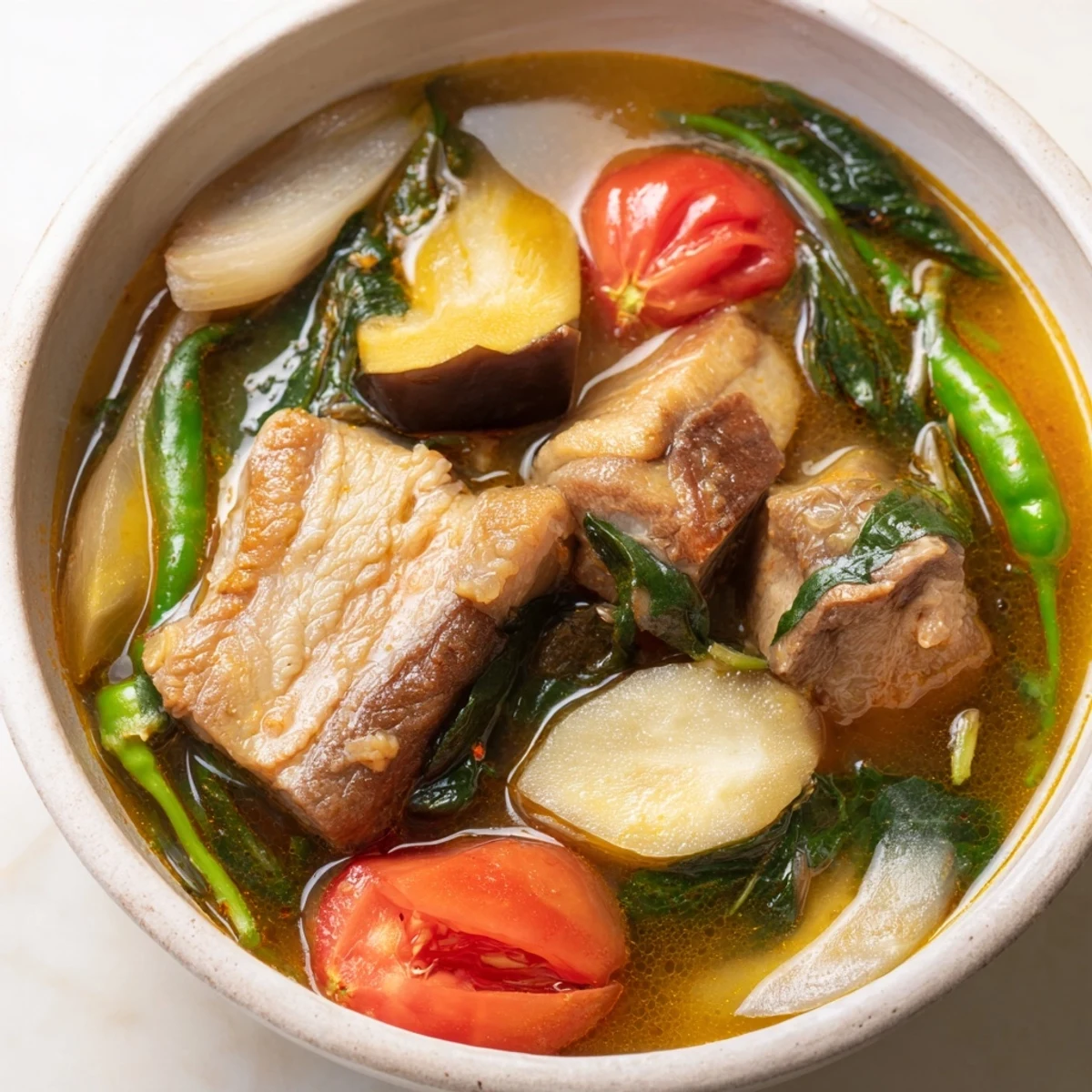
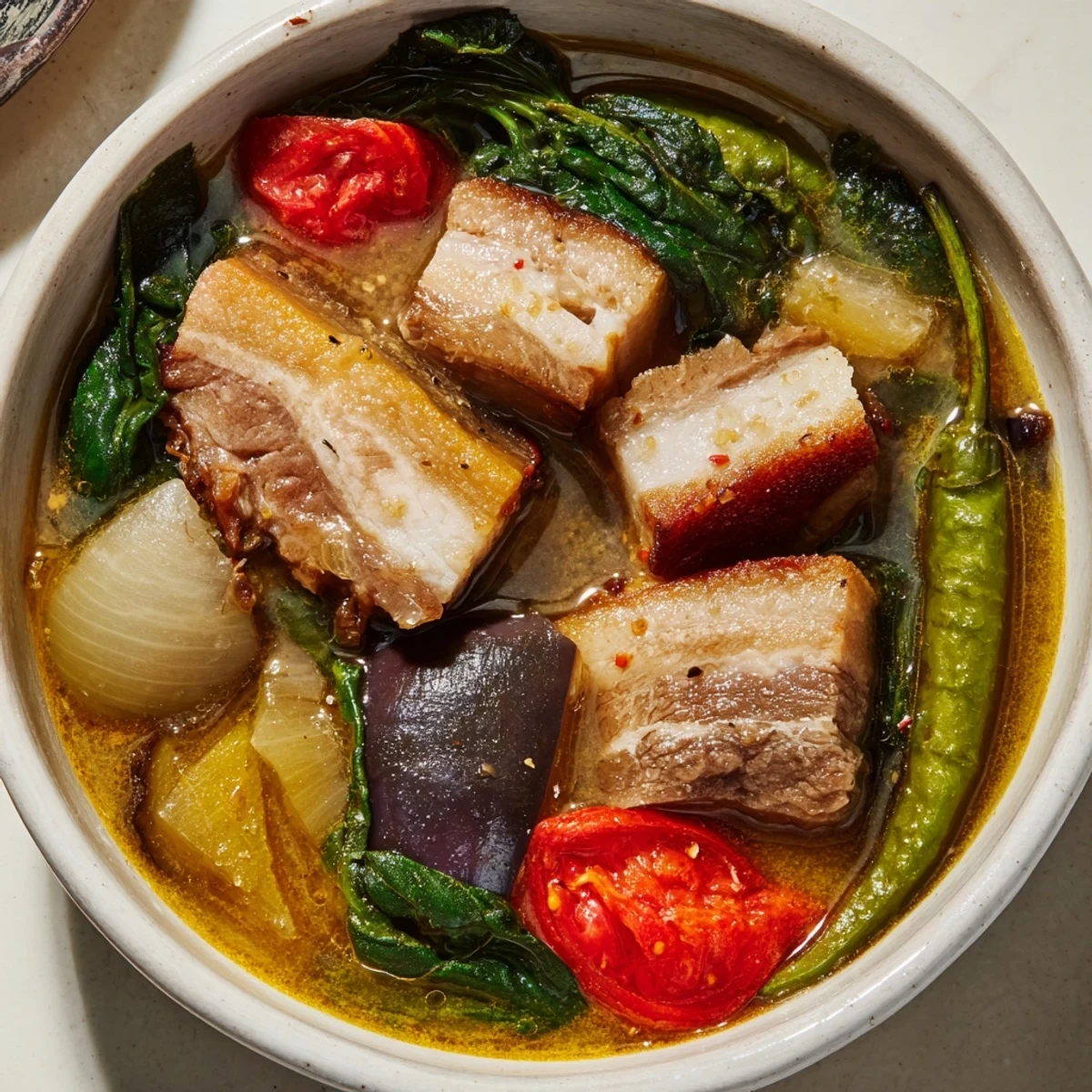
 This beloved Filipino dish combines succulent pork pieces with an array of fresh vegetables in a distinctly sour and savory broth. The signature tanginess comes from tamarind, creating that perfect balance Filipinos crave in comfort food. Ready in just over an hour, this hearty soup nourishes with daikon radish, eggplant, string beans, and leafy greens all simmering together. Serve piping hot over steamed white rice for the ultimate warming experience on rainy days or whenever you need authentic homemade flavors.
The first time my aunt made Sinigang during a stormy afternoon in Manila, I watched her drop fresh tamarind into boiling water like she was adding magic. The sour aroma filled her tiny kitchen, cutting through the humidity and rain, and I've been chasing that perfect tang ever since. Now every time pork belly hits the pot, I'm back in her doorway, watching the steam rise.
My roommate walked in while I was simmering the broth last week and immediately asked what smelled so incredible. She ended up staying for dinner, hovering over the pot with a spoon, and we ended up eating on the kitchen floor because the dining table was buried in laundry. Some meals create their own perfect moments.
Ingredients
- 1 kg pork belly or ribs: The fat melts into the broth creating richness that balances the sour
- 2 medium tomatoes: Quarter them so they break down and add sweetness to the broth
- 1 large onion: Peeled and quartered, this is the aromatic foundation
- 1 daikon radish: Peel and slice it into rounds that soak up the tangy broth
- 10 string beans: Trimmed and cut into 2 inch pieces for easy spooning
- 1 eggplant: Sliced, it becomes silky when cooked in the sour soup
- 2 cups spinach or kangkong: Washed well, dropped in at the very last moment
- 1 packet tamarind soup base: Or use fresh tamarind pulp if you can find it
- 2 tbsp fish sauce: Adds the essential umami depth
- 1 tsp salt: Adjust this after the tamarind is fully incorporated
- ½ tsp black pepper: Freshly ground makes a noticeable difference
- 6 cups water: Start with this, you can always add more
Instructions
- Build your broth base:
- Bring water to a rolling boil in a large pot, then add pork chunks, skimming off any gray foam that rises to the top for a cleaner soup.
- Add the aromatics:
- Drop in tomatoes and onions, then simmer for 20 minutes until pork begins to soften and the vegetables start breaking down.
- Add hearty vegetables:
- Stir in daikon slices and cook for 10 minutes until they're slightly tender but still hold their shape.
- Add delicate vegetables:
- Add eggplant, string beans, and chilies if using, simmering for just 5 minutes so they don't turn mushy.
- Create the signature sour broth:
- Mix in the tamarind base or dissolve fresh tamarind pulp in a little water, strain, and add to the pot.
- Season to perfection:
- Add fish sauce, salt, and pepper, tasting and adjusting until the sour salty balance hits exactly right.
- Finish with greens:
- Drop in spinach leaves and simmer for just 2 to 3 minutes until perfectly wilted.
- Serve immediately:
- Ladle hot over steamed white rice and watch everyone reach for seconds.
 Pin it
 This soup became my go to comfort food during graduate school when rainy days made everything feel overwhelming. Something about that perfect sour warm broth makes the world feel manageable again.
Choosing Your Protein
Pork belly offers the most flavorful result because the fat renders into the broth creating body and richness that balances the sharp sour notes. Ribs work beautifully too and add a comforting finger food element, while shrimp creates a lighter version perfect for hot summer days when you still crave that distinctive Sinigang tang.
Vegetable Timing
Learning when to add each vegetable changed everything about my Sinigang game. Daikon needs the longest cooking time to soften without losing structure, while eggplant and string beans turn sad and mushy if overcooked. The greens literally need seconds, so keep them ready by the stove and drop them in when everything else is perfect.
Sourness Level
Filipino families argue about this more than politics, with some preferring face puckering intensity and others wanting just a gentle tang. Start with less tamarind base than the package suggests, taste, and add more gradually until it hits your personal sweet spot.
- You can always add more sour but you cannot take it back
- Fish sauce contributes salt so taste before reaching for the shaker
- The broth continues to develop flavor as it sits
 Pin it
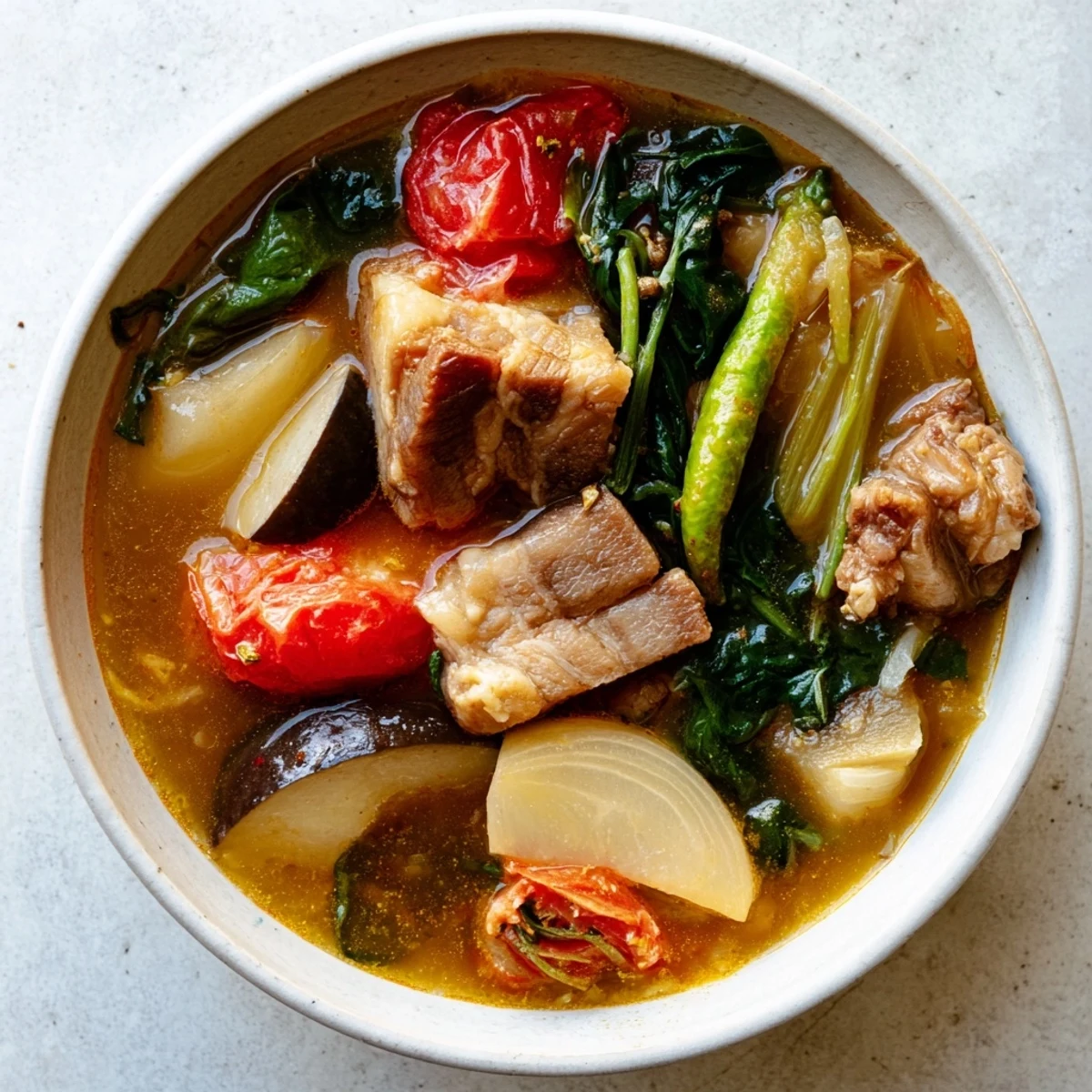
 There's something healing about a soup that makes your whole mouth wake up and pay attention. This is the one I make when people need comforting but also want something exciting.
Recipe FAQs
- → What makes Sinigang taste sour?
-
The distinctive sourness comes from tamarind, either using fresh tamarind pulp boiled and strained into the broth or convenient tamarind soup base mixes. This tart element defines the dish and perfectly balances the savory pork and vegetables.
- → Can I use other proteins besides pork?
-
Absolutely. While pork belly or ribs provide rich flavor, you can substitute with beef, shrimp, or fish. Seafood versions are lighter and should be added during the last 10 minutes of cooking to prevent overcooking delicate proteins.
- → What vegetables work best in Sinigang?
-
Traditional choices include daikon radish, eggplant, string beans, tomatoes, onions, and leafy greens like spinach or water spinach. You can also add okra or taro based on preference and seasonal availability.
- → How do I adjust the sourness level?
-
Start with the recommended amount of tamarind base, then taste your broth. Add more tamarind gradually if you prefer extra tang. The seasoning with fish sauce and salt helps balance the acidity to your personal taste preference.
- → What should I serve with Sinigang?
-
Steaming white rice is the traditional accompaniment, soaking up that flavorful sour broth. A chilled glass of Sauvignon Blanc pairs beautifully with the tangy notes. Serve family-style with the soup as the main centerpiece.
- → How long does Sinigang keep in the refrigerator?
-
Properly stored in an airtight container, Sinigang keeps well for 3-4 days refrigerated. The flavors often deepen and improve overnight. Reheat gently on the stovetop, adding a splash of water if the broth has reduced too much.