
 Pin it
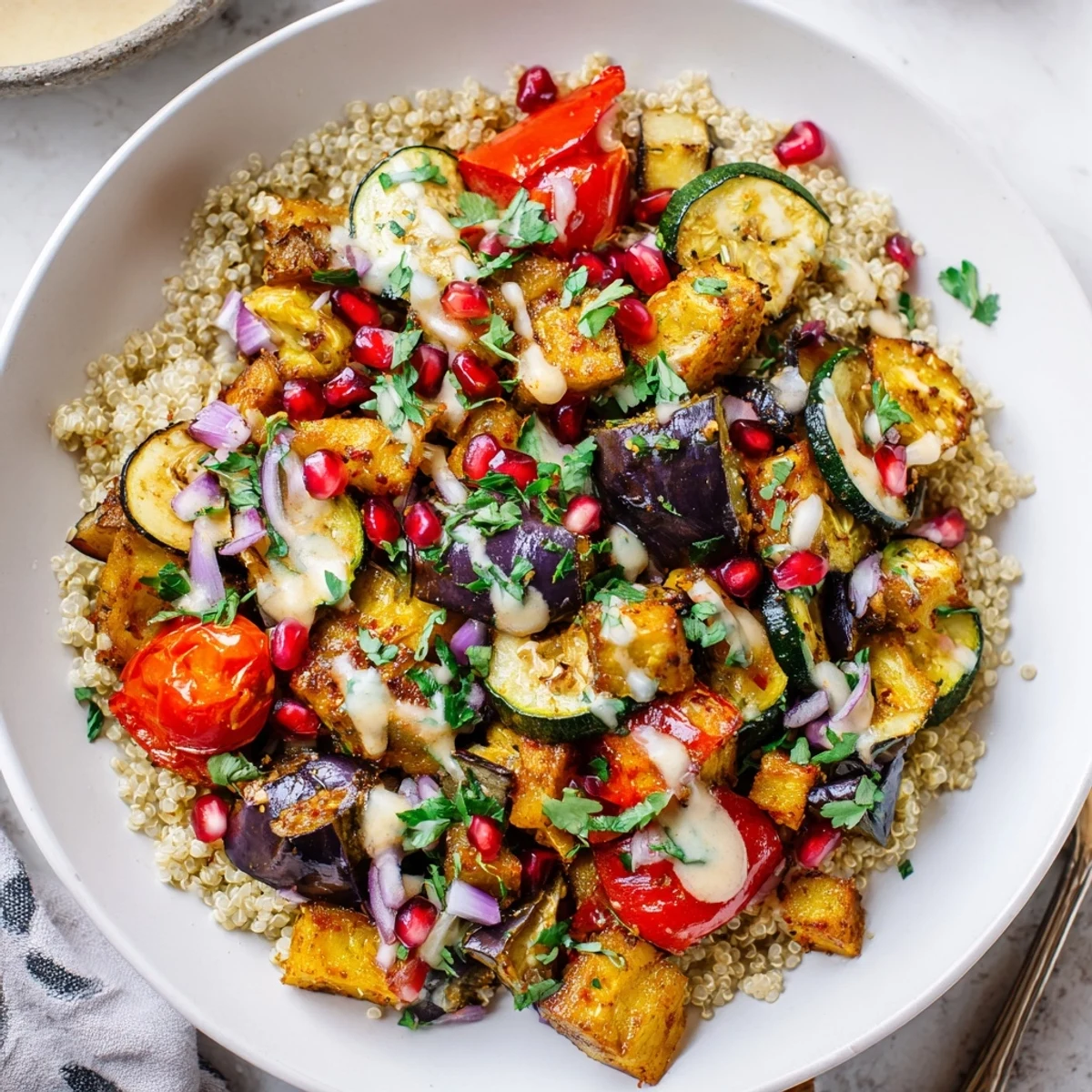
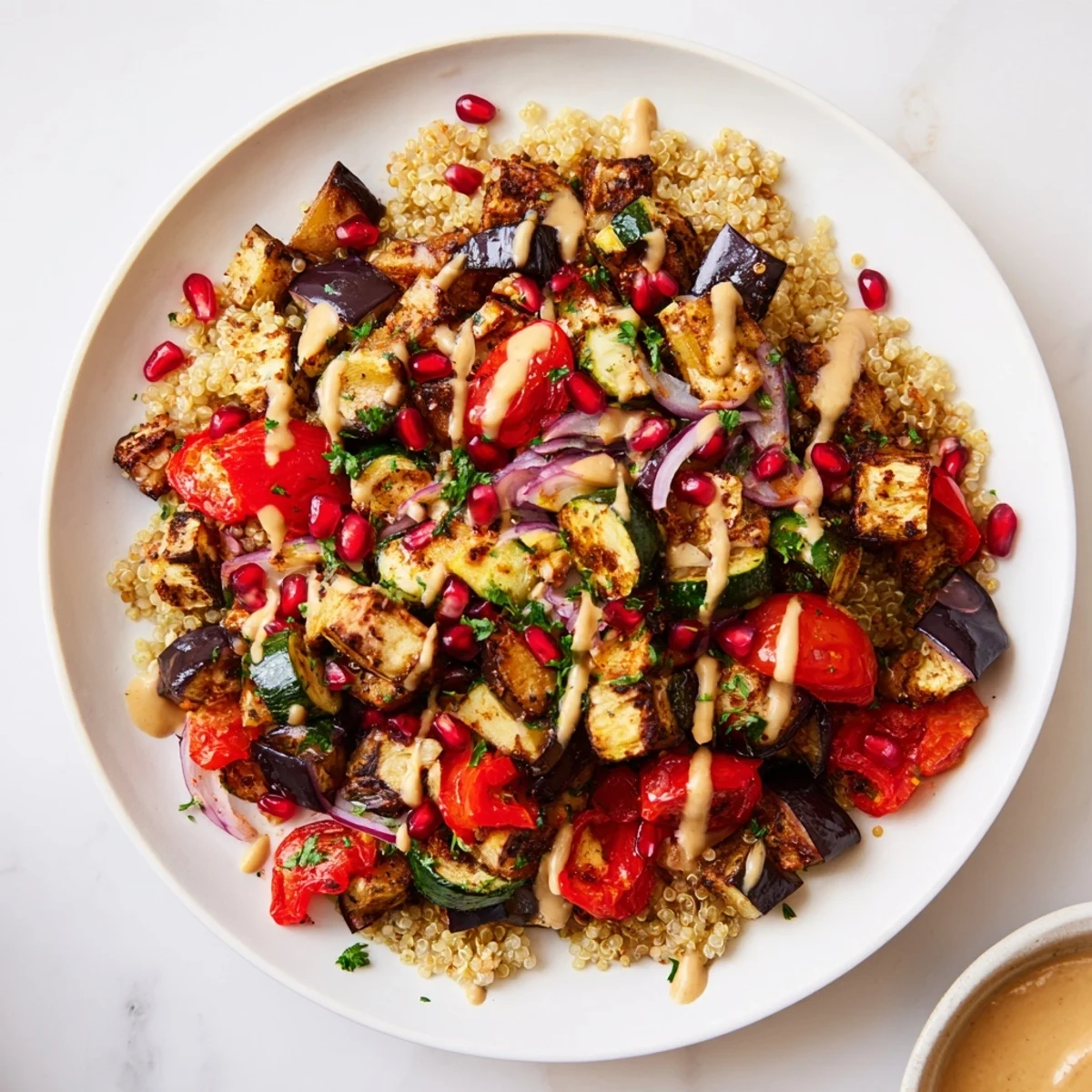
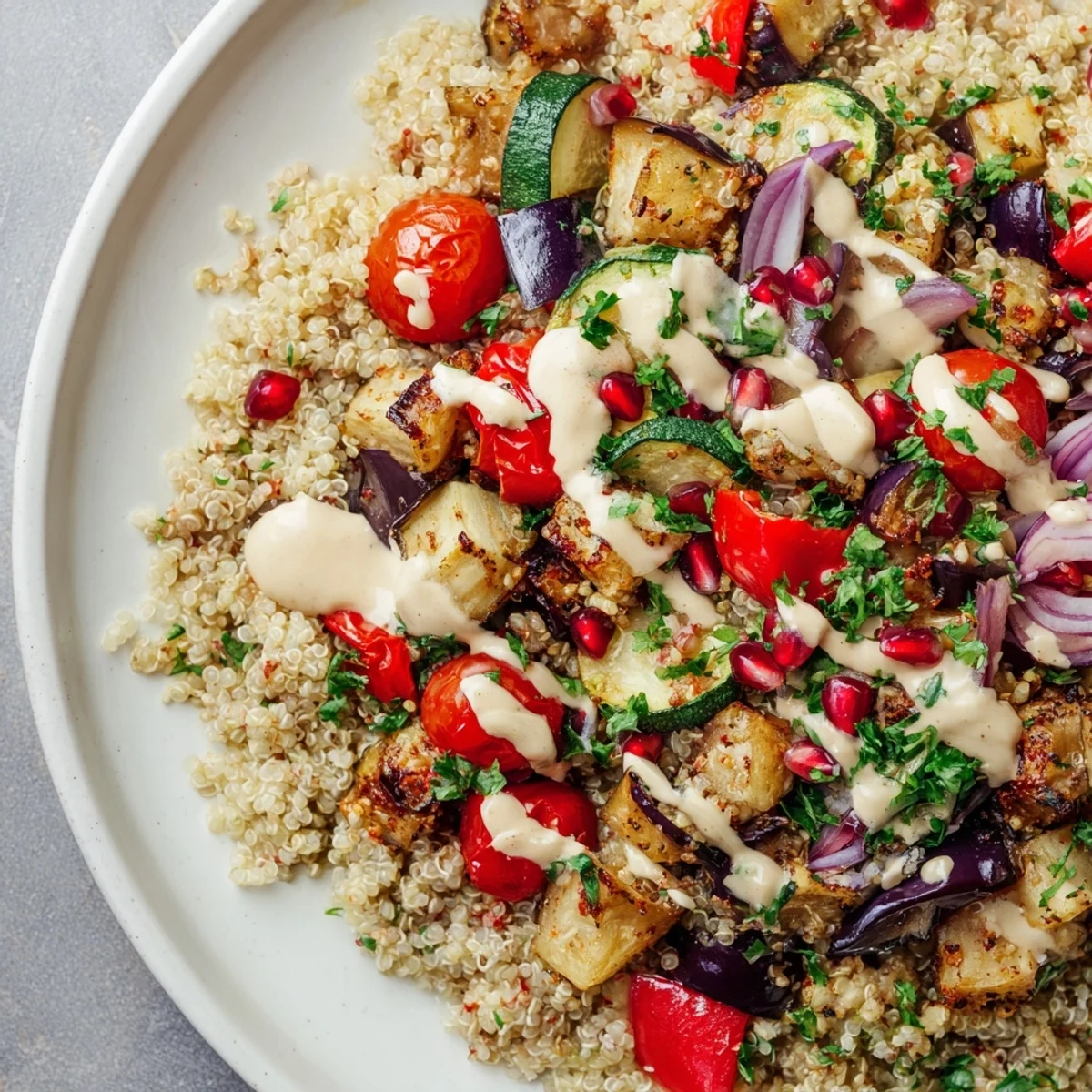
 This vibrant grain bowl brings together tender roasted eggplant, smoky bell peppers, and zucchini over a bed of fluffy quinoa. The real star is the creamy tahini dressing, brightened with fresh lemon juice and garlic, that ties everything together.
Ready in under an hour, it's a wholesome Mediterranean-inspired meal perfect for meal prep or a satisfying weeknight dinner. Each bowl is finished with juicy cherry tomatoes, sharp red onion, and a burst of pomegranate seeds for color and freshness.
My apartment smelled like a summer market in Tel Aviv the evening I threw this bowl together from whatever sat in the crisper drawer. Roasted eggplant has that effect: it transforms a humble Wednesday into something worth slowing down for. The tahini drizzle was an afterthought that became the whole reason I kept making it. Four bowls disappeared that night, and I have been refining the ratios ever since.
A friend who claimed she hated eggplant polished off two servings at a picnic table last July and then quietly asked for the recipe by text that same evening. That conversion moment is the real reward of cooking.
Ingredients
- 1 cup quinoa (or brown rice, farro, or bulgur): Rinse it well under cold water to remove the bitter coating, because skipping this step is the fastest way to ruin an otherwise perfect bowl.
- 1 large eggplant, diced: Salt the cubes lightly and let them sit ten minutes if you have time, which draws out moisture and helps them roast up golden instead of soggy.
- 1 red bell pepper, diced: Its sweetness balances the smoky spices and adds a bright color contrast that makes the bowl look as good as it tastes.
- 1 medium zucchini, sliced: Cut rounds about half an inch thick so they char on the outside but keep a tender bite inside.
- 3 tbsp olive oil: Be generous here, because eggplant drinks up oil like a sponge and you want those crispy edges.
- 1 tsp smoked paprika and 1/2 tsp ground cumin: This duo is the warm, earthy backbone of the whole dish and makes the vegetables taste deeply seasoned with almost no effort.
- Salt and pepper: Season the vegetables before roasting and taste the dressing separately before serving.
- 1 cup cherry tomatoes, halved: Their juicy pop cuts through the richness of the tahini and roasted vegetables.
- 1/4 cup fresh parsley, chopped: Add it at the very end so it stays vibrant and fresh rather than wilting under heat.
- 1/4 cup pomegranate seeds (optional): They bring a tart crunch that surprises people in the best way, and the ruby color against the golden eggplant is stunning.
- 1/4 small red onion, thinly sliced: Soak the slices in cold water for five minutes if you find raw onion too sharp.
- 3 tbsp tahini: Stir it well before measuring because separation is natural and you want a creamy, not gritty, dressing.
- 2 tbsp lemon juice: Fresh squeezed only, since the bottled version tastes flat and this dressing relies on that brightness.
- 1 tbsp extra virgin olive oil: A fruity oil here elevates the dressing from good to something you want to eat with a spoon.
- 1 to 2 tbsp water: Add gradually until the dressing flows like honey rather than paste.
- 1 small garlic clove, minced: One clove is enough, because raw garlic can easily overpower the delicate tahini flavor.
Instructions
- Heat the oven:
- Crank it to 220 degrees Celsius (425 degrees Fahrenheit) and line a baking sheet with parchment paper so nothing sticks and cleanup is effortless.
- Season and roast the vegetables:
- Toss the diced eggplant, bell pepper, and zucchini with olive oil, smoked paprika, cumin, salt, and pepper until everything glistens evenly. Spread them in a single layer without crowding, because overlapping pieces steam instead of roast, and give them 25 to 30 minutes with a stir halfway through until the edges turn deep golden and caramelized.
- Cook the grains:
- While the vegetables roast, rinse the quinoa and combine it with water and salt in a saucepan, bring it to a boil, then drop the heat to low, cover it, and simmer for 15 minutes until the water disappears. Let it sit off the heat for five minutes before fluffing with a fork so each grain stays separate and light.
- Whisk the tahini dressing:
- In a small bowl, whisk tahini, lemon juice, olive oil, garlic, and water one tablespoon at a time until it pours smoothly and tastes bright and nutty. Season with salt and pepper, and trust your palate over the recipe measurements.
- Build the bowls:
- Divide the fluffy quinoa among four bowls and arrange the roasted vegetables, cherry tomatoes, red onion, and parsley on top in loose piles rather than rigid sections. Drizzle the tahini dressing generously and scatter pomegranate seeds over everything if you are using them.
- Serve and enjoy:
- These bowls are wonderful warm or at room temperature, which makes them forgiving for gatherings where people drift toward the table at different times.
 Pin it
 There is a specific kind of quiet satisfaction in watching someone take a bite of something you assembled from ordinary vegetables and close their eyes for a second.
Grain Swaps That Actually Work
Quinoa cooks fast and packs protein, but farro brings a chewy nuttiness that pairs especially well with the smoky roasted vegetables if you have an extra twenty minutes. Brown rice works in a pinch, though it needs longer and tends to be less fluffy. Bulgur is the weeknight hero because it barely needs cooking at all, just a steep in hot water while the vegetables roast.
Turning It Into a Meal Prep Staple
Keep the dressing in a separate jar and the roasted vegetables in their own container so nothing gets soggy overnight. The grains actually improve in texture after a day in the fridge, absorbing flavors and firming up slightly. On day three, toss any leftovers into a wrap with a handful of greens and an extra squeeze of lemon for an entirely different lunch that barely required thinking.
Little Upgrades Worth Trying
Sometimes the best versions come from straying slightly from the script and raiding the pantry for whatever sounds good. A handful of toasted pine nuts or slivered almonds on top adds a crunch that makes each bite more interesting. Roasted chickpeas tossed in the same spices as the vegetables double the protein and turn this into something hearty enough for a hungry evening.
- Crumble feta or grill halloumi slices for a salty, creamy element if dairy is on the table.
- A chilled glass of Sauvignon Blanc alongside this bowl turns a random Tuesday dinner into something that feels intentional.
- Taste the dressing one last time before serving, because a tiny pinch of salt or squeeze of lemon at the end fixes almost anything.
 Pin it
 This bowl is a reminder that dinner does not need to be complicated to be worth remembering. Sometimes eggplant and tahini and a little patience are more than enough.
Recipe FAQs
- → Can I use a different grain instead of quinoa?
-
Absolutely. Brown rice, farro, bulgur, or even couscous work beautifully in this bowl. Adjust cooking times and liquid ratios according to your chosen grain.
- → How should I store leftovers?
-
Store the grains and roasted vegetables in an airtight container in the refrigerator for up to 4 days. Keep the tahini dressing separately in a jar and whisk before reusing, as it may thicken when chilled.
- → Can I serve this bowl cold?
-
Yes, this bowl is delicious warm or at room temperature, making it an excellent option for packed lunches or picnics. The flavors actually deepen after resting for a few hours.
- → What can I add for extra protein?
-
Roasted chickpeas are a fantastic crunchy addition. For non-vegan diets, crumbled feta or grilled halloumi complement the flavors perfectly. You could also add a soft-boiled egg on top.
- → How do I prevent the eggplant from becoming soggy?
-
Cut the eggplant into even cubes and spread them in a single layer on the baking sheet without overcrowding. Roasting at a high temperature of 220°C (425°F) ensures caramelization rather than steaming.
- → Is the pomegranate garnish necessary?
-
It's optional but highly recommended. The pomegranate seeds add a bright, tart pop that balances the smoky and creamy elements of the bowl. Dried cranberries can serve as a substitute.