
 Pin it
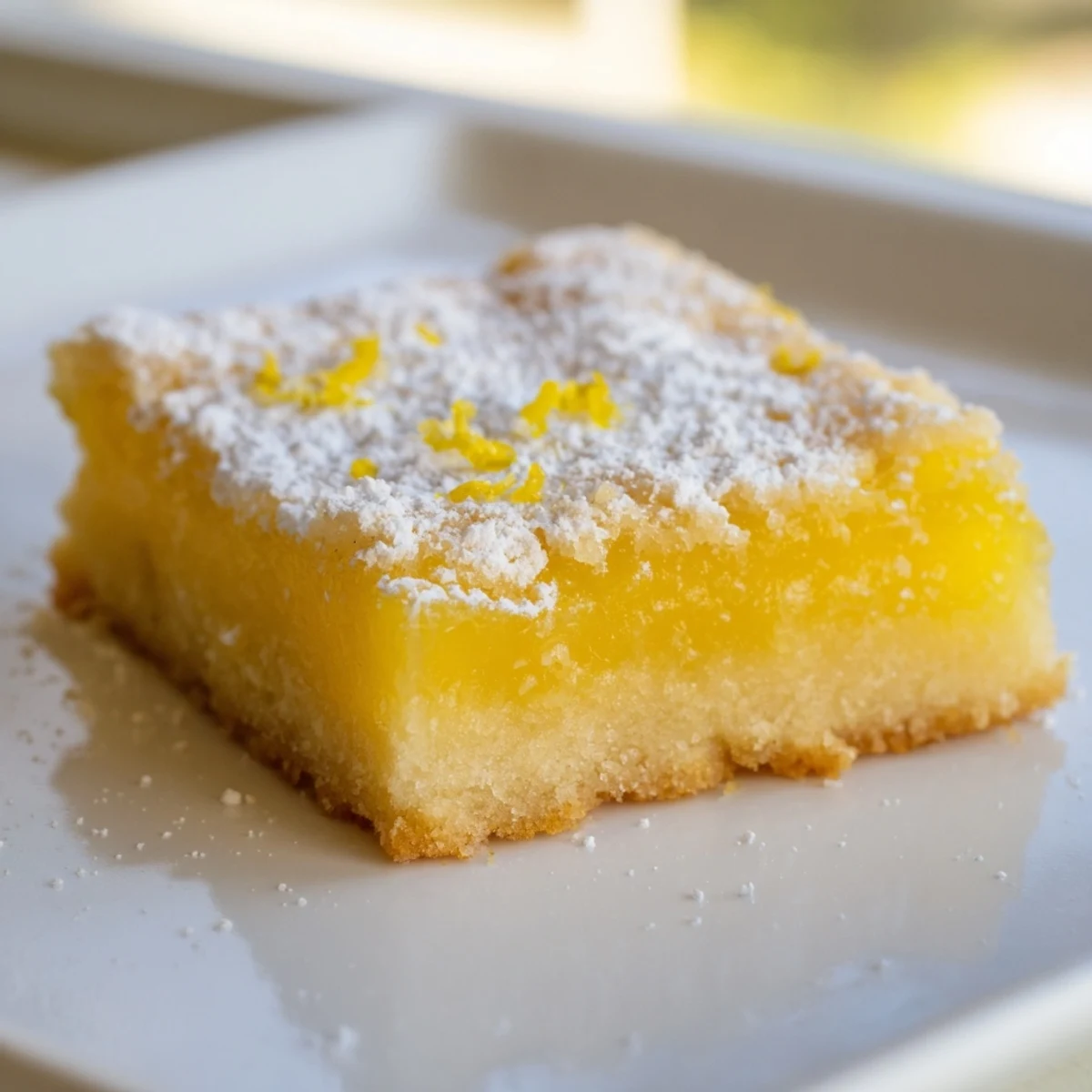
 These bright and fresh lemon bars combine a buttery, crumbly shortbread crust with a tangy, citrus-forward lemon filling. The crust is made by creaming softened butter with sugar, then blending in flour and salt before pressing into a pan and baking until golden.
The filling comes together quickly by whisking eggs, sugar, flour, fresh lemon juice, and zest until smooth. Poured over the hot crust and baked at a lower temperature, it sets into a silky, custard-like layer with a vibrant lemon flavor.
Finished with a dusting of powdered sugar, these bars are ideal for spring and summer gatherings, potlucks, or anytime you crave a sweet-tart citrus treat. They store well in the fridge for up to four days.
Something about the smell of lemons being zested makes the whole kitchen feel like it has its eyes open, wide and bright. My neighbor handed me a paper bag heavy with Meyer lemons from her backyard tree one April morning, and these bars were born out of pure obligation to not let them go to waste. That first batch disappeared at a potluck before the main dishes were even touched. Now they show up at every spring gathering I host, no questions asked.
I once brought a tray of these to a friends rooftop birthday party, setting them down next to a towering professional cake. By sunset, the cake sat mostly untouched while someone was literally licking lemon bar crumbs off the parchment paper. That is the quiet power of a simple, honest dessert doing its job without any fuss.
Ingredients
- Unsalted butter (1 cup, softened): The foundation of a tender shortbread crust, so use good quality butter if you can find it.
- Granulated sugar (1/2 cup for crust, 1 1/2 cups for filling): Separate amounts for each layer, because the crust needs restraint while the filling balances the lemons natural acidity.
- All-purpose flour (2 cups for crust, 1/4 cup for filling): That small quarter cup in the filling is the secret to setting without turning rubbery.
- Salt (1/4 tsp): Just enough to wake up the butter in the crust.
- Large eggs (4): They give the lemon filling its silky, custard like texture and help it set to that perfect slight wobble.
- Fresh lemon juice (2/3 cup, about 3 to 4 lemons): Bottled juice will not deliver the same bright, alive flavor, so squeeze your own.
- Lemon zest (1 tbsp, finely grated): This is where the perfume lives, so zest before you juice and really lean into it.
- Powdered sugar (for dusting): A snow like finishing touch that also helps cover any imperfections with sweetness.
Instructions
- Preheat and prepare the pan:
- Set your oven to 350 degrees F and line a 9 by 13 inch baking pan with parchment, leaving overhang on the sides like handles. This little trick saves you from the dreaded stuck bar situation later.
- Build the shortbread crust:
- Cream the softened butter and half cup of sugar together until pale and fluffy, then add the flour and salt, mixing until a crumbly dough comes together. Press it firmly and evenly into the bottom of your pan using your palms or the back of a measuring cup.
- Bake the crust until golden:
- Slide the crust into the oven for 18 to 20 minutes, watching for the edges to turn a warm golden brown. Your kitchen will start smelling like buttered heaven right about now.
- Whisk the lemon filling:
- While the crust bakes, beat the eggs and remaining sugar until blended, then whisk in the flour until smooth. Pour in the fresh lemon juice and zest, stirring gently so you do not create too many air bubbles.
- Combine and bake at lower heat:
- Pull the golden crust from the oven, reduce the temperature to 325 degrees F, and pour the filling directly over the hot crust. Return it to the oven for another 18 to 20 minutes until the center is set with just the faintest tremble when nudged.
- Cool, cut, and finish:
- Let the bars cool completely in the pan on a wire rack, then use the parchment handles to lift the whole slab out. Cut into squares and shower with powdered sugar just before serving so it does not dissolve into the surface.
 Pin it
 There is a specific kind of satisfaction in sliding that first perfect square off the cutting board, edges clean and golden, the lemon layer catching the light like a little window into spring. These bars have a way of making people close their eyes on the first bite, which is really all the feedback you need.
A Few Words on Timing
Lemon bars actually taste better on the second day, after they have spent a night in the fridge and the flavors have settled into each other. If you are making them for an event, bake them the evening before and let the cold work its quiet magic. The crust firms up beautifully, and the filling becomes almost velvety. Just remember to dust the sugar on right before serving, not before storing.
Swaps and Variations
Lime juice makes a wildly good substitute if you want something even more floral and sharp. Orange juice and zest create a softer, sweeter bar that feels more like a winter afternoon. You can also add a handful of fresh blueberries to the filling before baking for little bursts of fruit throughout. Each version has its own personality, so treat this recipe like a conversation starter rather than a rulebook.
Keeping Them Fresh
Store leftover bars in an airtight container in the fridge, where they will stay lovely for up to four days. You can also freeze them between layers of parchment for up to two months, though honestly they rarely last that long. Let frozen bars thaw overnight in the fridge before serving.
- Always cut with a clean, sharp knife wiped between slices for those picture perfect edges.
- If the powdered sugar melts into the top, simply add another dusting right before guests arrive.
- These bars travel well, but keep them chilled in a cooler bag for outdoor gatherings.
 Pin it
 Keep a plate of these in your fridge all season long and you will never be caught without something sweet to offer an unexpected guest. They are proof that the simplest desserts, the ones made with butter, sugar, and real lemons, are the ones people remember.
Recipe FAQs
- → Can I use bottled lemon juice instead of fresh?
-
Fresh lemon juice is strongly recommended for the brightest, most natural flavor. Bottled juice can taste flat or slightly bitter. Fresh zest also adds aromatic oils that bottled alternatives simply cannot replicate.
- → How do I know when the lemon filling is fully set?
-
Gently shake the pan after the suggested baking time. The center should not jiggle or wobble. If it still moves, continue baking in two-minute increments until the center is firm and set throughout.
- → Why do I pour the filling over a hot crust?
-
Pouring the lemon filling over the warm crust helps it begin setting immediately and creates a seamless bond between the two layers. This prevents the filling from soaking into the crust and keeps the layers distinct.
- → Can I substitute a different citrus fruit?
-
Yes, lime or orange juice and zest work well as substitutions. Lime will give a sharper, more tart flavor while orange produces a sweeter, milder result. Adjust sugar slightly to taste depending on the citrus you choose.
- → How should I cut lemon bars cleanly?
-
Make sure the bars are completely cooled, ideally chilled for an hour. Use a sharp knife wiped clean between each cut. Lifting the slab out using the parchment overhang makes cutting much easier and more precise.
- → Can I freeze lemon bars?
-
Yes, lemon bars freeze well for up to three months. Cut them into squares, wrap each tightly in plastic wrap, and place in an airtight container. Thaw overnight in the fridge and dust with powdered sugar just before serving.