
 Pin it
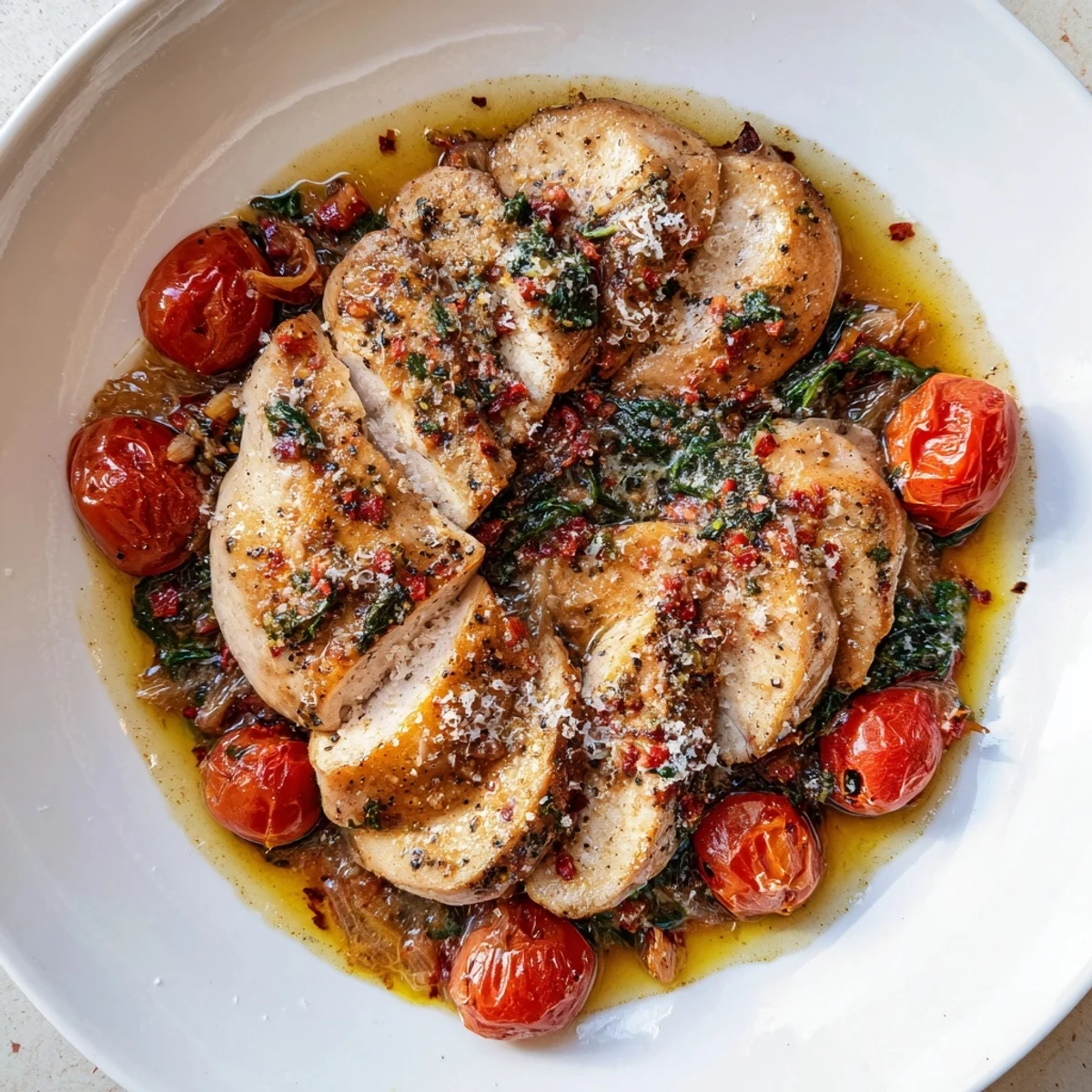
 Sear seasoned chicken breasts until golden, then sauté onion and garlic. Add halved cherry tomatoes and deglaze the pan with dry white wine, scraping up browned bits. Stir in chicken broth, oregano and a pinch of red pepper flakes, return the chicken and simmer until cooked. Finish by stirring in fresh spinach until wilted and serve hot with a Parmesan garnish if desired.
The sizzle of chicken hitting a hot pan on a rainy Tuesday evening is one of those small sounds that instantly makes a kitchen feel alive. I had a half bottle of Pinot Grigio sitting on the counter and a bag of spinach threatening to wilt in the crisper drawer, and somehow those three things turned into one of the most requested dinners in my house. There is something deeply satisfying about a one skillet meal that looks like it took far more effort than it actually did.
My neighbor Karen knocked on my door the first time I made this, asking what smelled so incredible that it drifted through the hallway. I invited her in with a glass of the same wine and we ended up sitting at the kitchen table until eleven, polishing off the entire skillet between the two of us.
Ingredients
- 4 boneless skinless chicken breasts: Pound them to even thickness so they cook uniformly and no one ends up with a dry edge.
- 2 cups fresh spinach roughly chopped: Rough chopping helps it wilt evenly and distribute through the sauce without clumping.
- 1 cup cherry tomatoes halved: Cherry tomatoes hold their shape better than larger cuts and burst into little pockets of sweetness.
- 3 cloves garlic minced: Fresh garlic is nonnegotiable here since it infuses the entire sauce base.
- 1 medium onion finely diced: The onion creates a sweet foundation that balances the acidity of the wine and tomatoes.
- 1 cup dry white wine: Sauvignon Blanc or Pinot Grigio work beautifully, and you should pick something you would actually drink.
- 1/2 cup chicken broth: This adds depth without overpowering the wine, keeping the sauce balanced and savory.
- 2 tbsp olive oil: A good quality olive oil makes a noticeable difference in the sear and overall richness.
- 1 tsp dried oregano: Rub it between your palms before adding to wake up the essential oils.
- 1/2 tsp crushed red pepper flakes (optional): Just enough warmth to notice but not enough to call it spicy.
- Salt and freshly ground black pepper: Season in layers throughout the cooking process for the best results.
- 2 tbsp grated Parmesan cheese (optional): A final shower of Parmesan adds a salty nutty finish that ties everything together.
Instructions
- Prep and season the chicken:
- Pat the chicken breasts completely dry with paper towels and season both sides generously with salt and pepper. Dry chicken sears better and gets that golden crust you are after.
- Sear to golden perfection:
- Heat olive oil in a large skillet over medium high heat until it shimmers, then add the chicken breasts. Cook for 4 to 5 minutes per side until deeply golden, then remove and set aside on a plate.
- Build the aromatics:
- In the same skillet with all those flavorful brown bits, add the diced onion and cook for 2 to 3 minutes until softened and translucent. Toss in the garlic and stir for about 30 seconds until the kitchen smells incredible.
- Let the tomatoes burst:
- Add the halved cherry tomatoes and cook for 3 minutes, gently pressing a few with your spoon so they release their juices into the pan.
- Deglaze with wine:
- Pour in the white wine and scrape up every last brown bit stuck to the bottom of the pan. Let it simmer for 2 minutes so the alcohol cooks off and the liquid reduces slightly.
- Simmer everything together:
- Add the chicken broth, oregano, and red pepper flakes, then nestle the chicken breasts back into the skillet. Cover with a lid, reduce heat to low, and simmer for 12 to 15 minutes until the chicken reaches 165 degrees internally.
- Wilt in the spinach:
- Remove the lid and stir in the chopped spinach, letting it cook for just 1 to 2 minutes until wilted but still vibrant green. Overcooking spinach turns it mushy and dull, so keep an eye on it.
- Finish and serve:
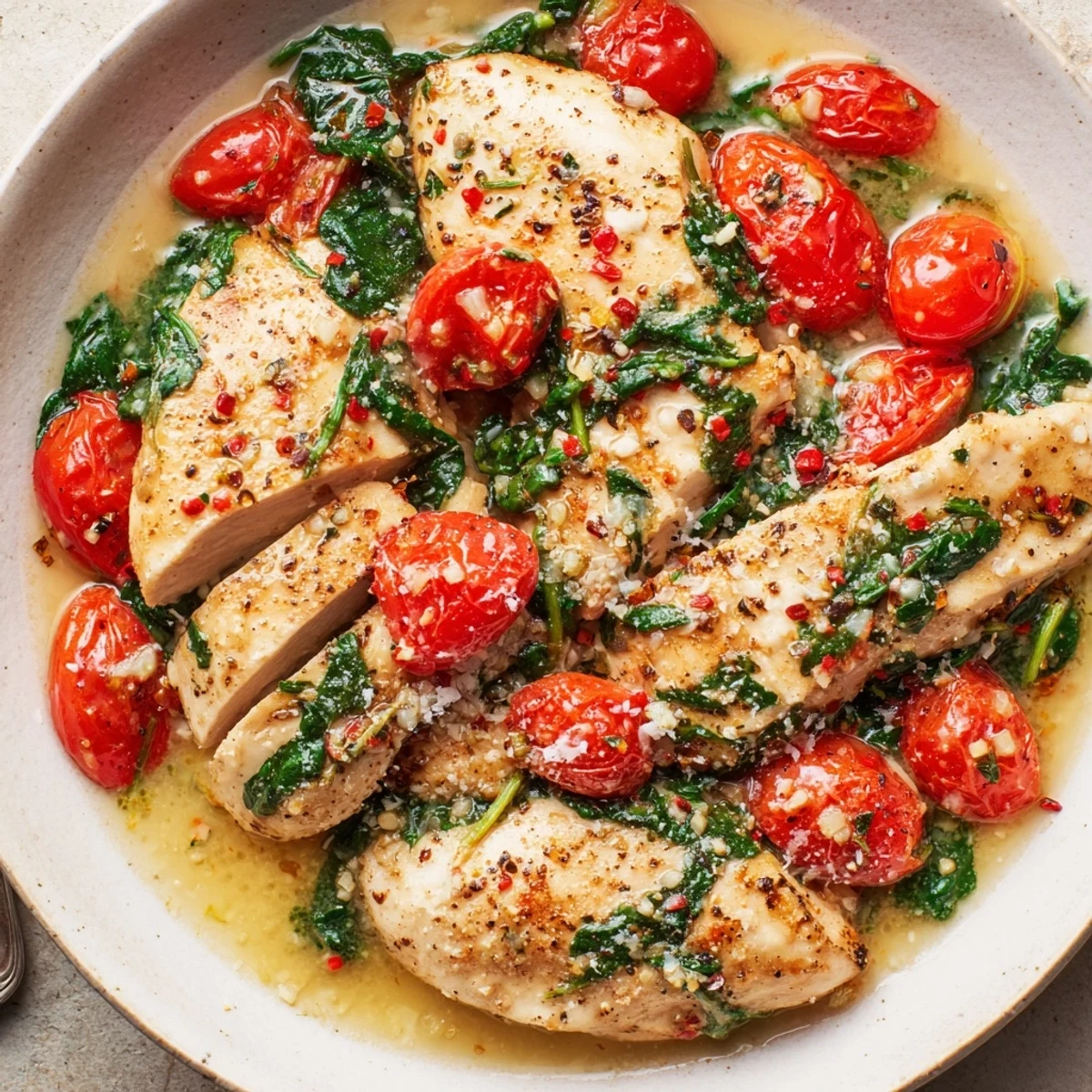
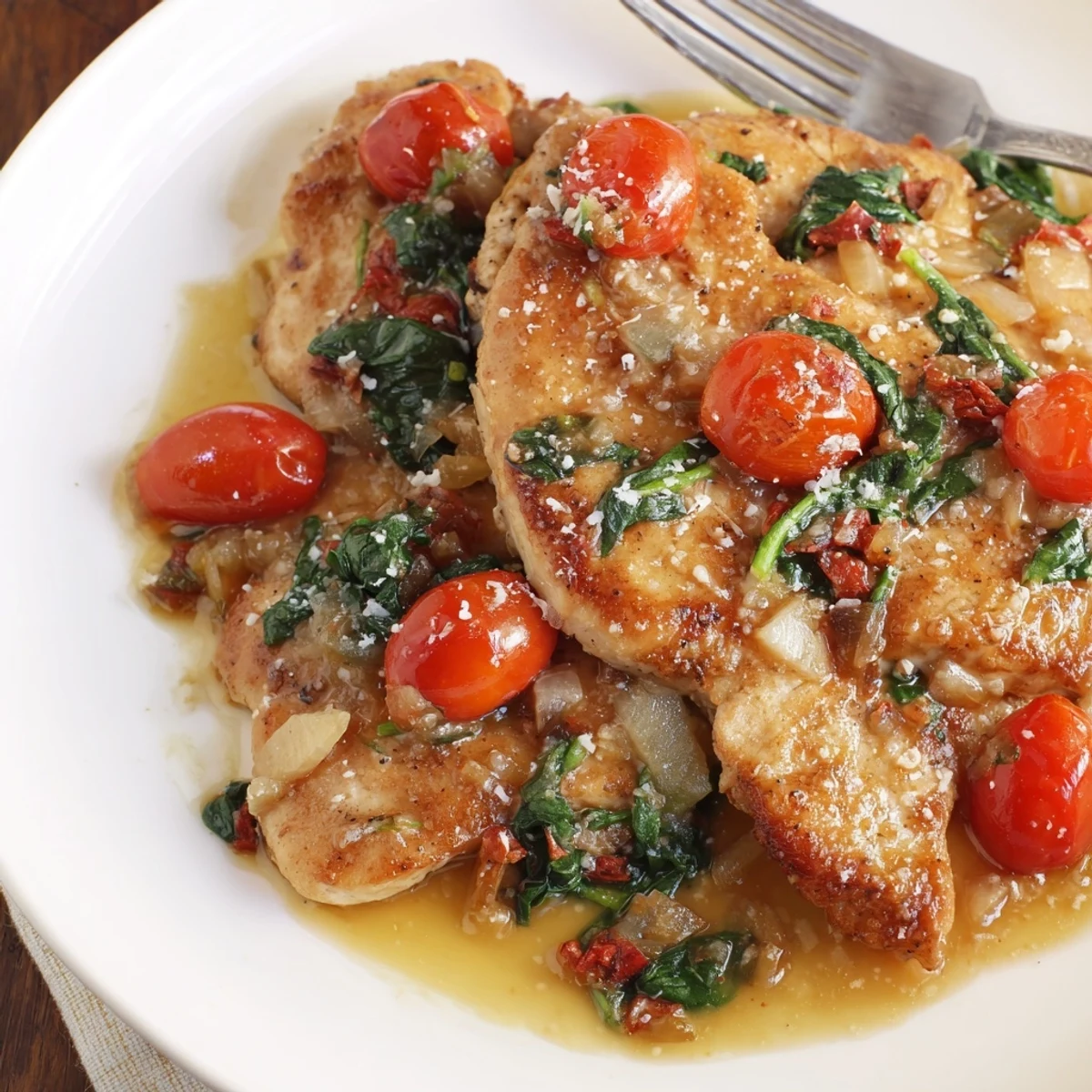
- Taste the sauce and adjust salt and pepper as needed. Serve immediately in shallow bowls, spooning plenty of sauce over each piece and finishing with Parmesan if you like.
 Pin it
 There is a specific kind of quiet that settles over a dinner table when everyone is too busy eating to talk, and this dish has produced that silence more times than I can count.
What to Serve Alongside
A hunk of crusty bread is the obvious choice because you will want something to soak up every drop of that wine sauce. Over the years I have also ladled this over creamy polenta, tucked it into rice bowls, and once served it alongside roasted potatoes when I had unexpected guests.
Making It Your Own
Baby kale or arugula can step in for spinach without changing the character of the dish, and both bring a slightly more peppery edge that I actually prefer sometimes. If you are avoiding dairy, simply skip the Parmesan and finish with a drizzle of good olive oil instead.
Storage and Reheating Wisdom
This reheats beautifully the next day as the flavors continue to meld in the fridge overnight, making it an excellent candidate for meal prep. Just warm it gently on the stove rather than blasting it in the microwave so the chicken stays tender.
- Store in an airtight container for up to three days.
- Freeze portions without the spinach for up to two months and add fresh greens when reheating.
- Always verify broth and cheese labels for hidden gluten if cooking for someone with celiac disease.
 Pin it
 Some dinners are about nourishment and some are about gathering people around a table without wanting it to end. This skillet somehow manages to be both, every single time.
Recipe FAQs
- → What wine works best for the sauce?
-
Choose a dry, crisp white such as Sauvignon Blanc or Pinot Grigio; they add acidity and brightness without overwhelming the tomatoes and spinach.
- → How do I keep the chicken juicy?
-
Pat breasts dry, season, and sear over medium-high heat to build a golden crust. Don’t overcook; simmer covered until internal temp reaches 165°F, then rest briefly before serving.
- → Can I use chicken thighs instead of breasts?
-
Yes. Bone-in or boneless thighs add richness and tolerate longer simmering. Reduce initial sear time slightly and ensure they reach a safe internal temperature.
- → How can I thicken the wine sauce?
-
Simmer uncovered a few minutes longer to reduce, or whisk a small slurry of cornstarch and water into the sauce at low heat until it reaches the desired consistency.
- → What can I substitute for spinach?
-
Baby kale, arugula or Swiss chard work well; add heartier greens earlier and cook until tender, while delicate leaves should be folded in at the end to just wilt.
- → Any tips for serving and pairings?
-
Serve with crusty bread to soak the sauce or over pasta for a fuller meal. Pair with the same white wine used in cooking for a cohesive plate.