
 Pin it
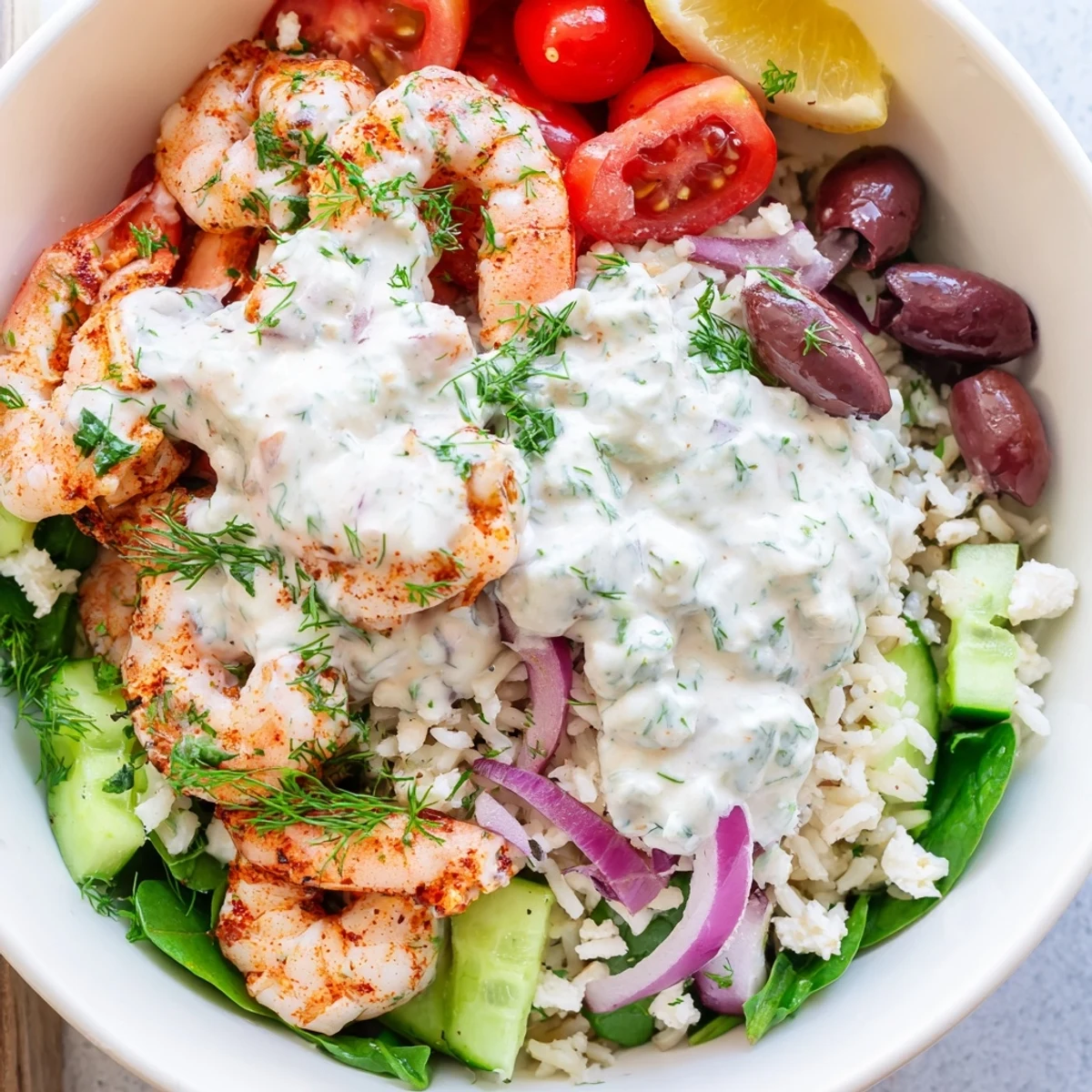
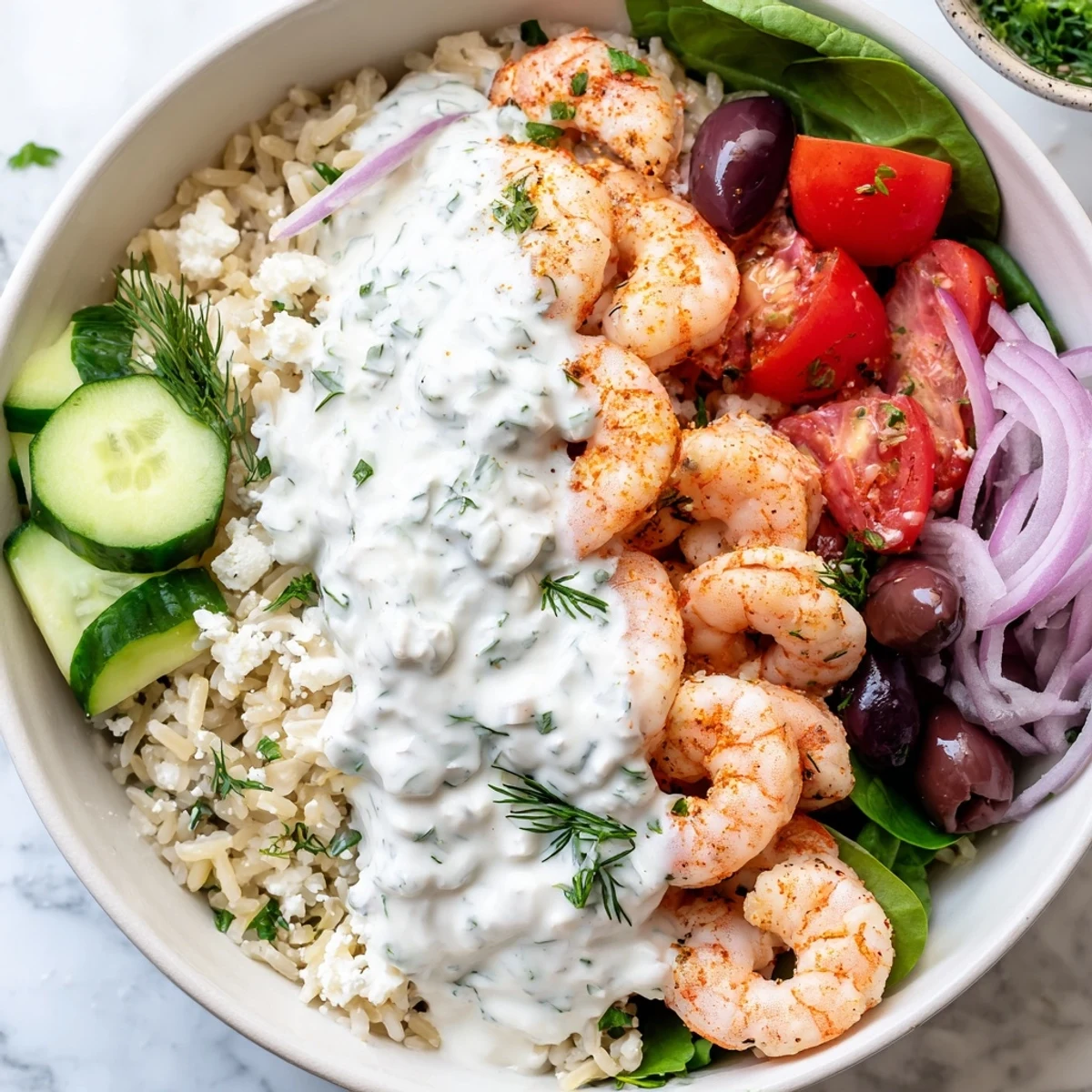
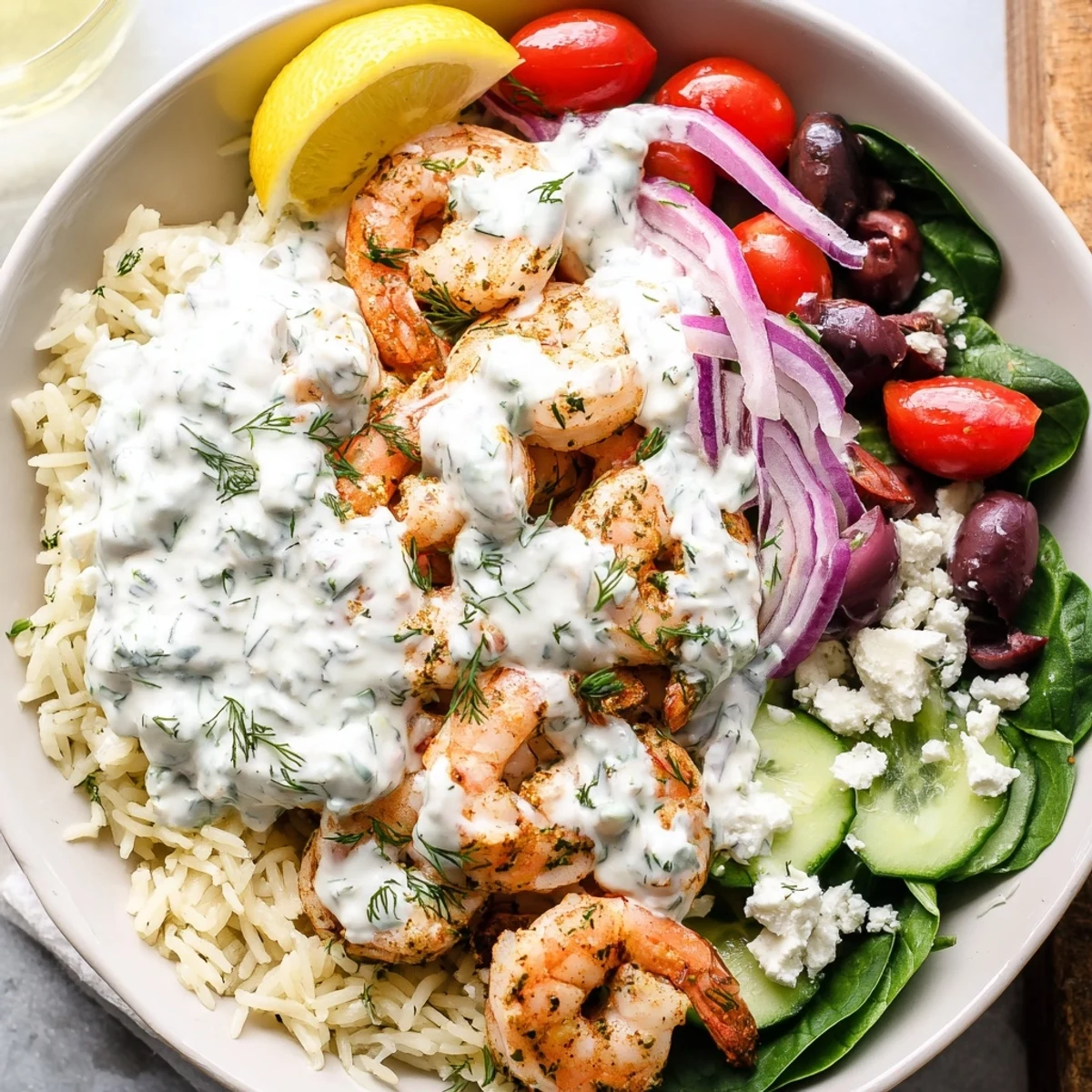
 This Greek shrimp Mediterranean bowl brings together perfectly seasoned, pan-seared shrimp nestled over fluffy lemony basmati rice. Topped with cherry tomatoes, cool cucumber, briny Kalamata olives, and crumbled feta, every bite delivers a balance of bright, savory flavors.
A generous drizzle of homemade tzatziki—cool Greek yogurt blended with grated cucumber, garlic, and fresh dill—ties everything together. Ready in just 35 minutes, it's an easy weeknight dinner that feels fresh and satisfying.
The summer my neighbor Elena brought over a bag of fresh shrimp from the harbor, I had no idea it would turn into the bowl I now crave at least twice a month. We stood in my kitchen with lemon zest under our fingernails and olive oil on the counter, throwing together whatever reminded us of a tiny taverna wed been to years ago in Crete. The smell of oregano hitting a hot skillet pulled her husband from the backyard, and within minutes three of us were eating standing up. That spontaneous chaos is exactly what this Greek Shrimp Mediterranean Bowl captures every single time.
I have served this to friends on a crumbling patio table and on my good china, and honestly the food disappears just as fast either way. There is something about the combination of warm spiced shrimp and cool cucumber that makes people slow down and go quiet.
Ingredients
- 1 lb (450 g) large shrimp, peeled and deveined: Go for the largest you can find because they stay juicier and get a better sear in the pan.
- 1 tbsp olive oil: Use a decent one here since it coats the shrimp and carries the flavor of every spice you add.
- 2 cloves garlic, minced: Fresh only, and mince it finer than you think you need to so it distributes evenly across the shrimp.
- 1 tsp dried oregano: Rub it between your palms before adding to wake up the oils and release way more fragrance.
- 1/2 tsp smoked paprika: This is the sneaky ingredient that gives the shrimp a slightly charred, grilled character even in a skillet.
- 1/4 tsp sea salt and 1/4 tsp black pepper: Keep these measured at first because the feta and olives add salt later.
- Juice of 1/2 lemon: Squeeze it fresh directly over the shrimp and save the other half for the tzatziki.
- 1 cup basmati or jasmine rice: Basmati gives you fluffier grains that soak up the tzatziki without turning mushy.
- 2 cups water: Standard ratio, but rinse the rice well first to remove excess starch.
- Zest of 1 lemon: This goes into the rice water and perfumes every single grain from the inside out.
- 1 cup cherry tomatoes, halved: Leave them cut side up when plating because it looks intentional and keeps the juice from pooling.
- 1 cup cucumber, diced: English cucumber works best since you avoid the watery seeds that can dilute the bowl.
- 1/2 cup Kalamata olives, pitted and sliced: Spend the extra dollar on real Kalamata because imitation olives taste flat beside all this brightness.
- 1/4 cup red onion, thinly sliced: Soak the slices in ice water for five minutes if you find raw onion too aggressive.
- 1/2 cup crumbled feta cheese: A good feta should crumble with some moisture left, not turn to dry dust.
- 2 cups baby spinach or mixed greens: Spinach holds up better if you are not eating immediately, while mixed greens wilt faster.
- 1/4 cup fresh parsley, chopped: Flat leaf parsley has more flavor than curly and looks cleaner as a garnish.
- 1 cup Greek yogurt: Full fat makes the creamiest tzatziki, and the thickness is what you want.
- 1/2 cup cucumber, finely grated and drained: Squeeze it in a towel until barely damp because excess water is the enemy of good tzatziki.
- 1 tbsp fresh dill, chopped: Dried dill works in a pinch but fresh dill is what makes people ask what is in the sauce.
Instructions
- Start the rice:
- Rinse the rice under cold water until it runs almost clear, then dump it into a saucepan with the water, lemon zest, and salt. Bring it to a boil, slap on the lid, and drop the heat to low for about 12 to 15 minutes until every grain is tender and the water has vanished. Fluff gently with a fork and leave the lid cracked so steam escapes.
- Marinate the shrimp:
- Toss the shrimp with olive oil, garlic, oregano, smoked paprika, salt, pepper, and lemon juice in a bowl until every piece is coated. Ten minutes is all it needs, and any longer actually starts to break down the texture.
- Sear the shrimp:
- Get your skillet hot over medium high heat and spread the shrimp in a single layer without crowding. Cook two to three minutes per side until they curl into a C shape and turn bright pink with golden spots, then pull them off immediately.
- Whip up the tzatziki:
- Stir together the Greek yogurt, grated squeezed cucumber, garlic, dill, lemon juice, olive oil, salt, and pepper in a small bowl until smooth. Taste it and adjust the salt because the flavors need a minute to marry in the fridge.
- Build the bowls:
- Divide the rice and greens among four bowls, then arrange the shrimp, tomatoes, cucumber, olives, red onion, and feta on top in loose sections. Spoon tzatziki generously over everything and shower with parsley.
 Pin it
 The first time I plated this for a potluck, someone actually stopped mid conversation to stare at the bowl before eating, which is honestly the highest compliment a home cook can get.
Making It Your Own
Swap the rice for quinoa or cauliflower rice if you want fewer carbs, and neither change dulls the experience at all. Grilled halloumi or roasted chickpeas stand in beautifully for shrimp when you need a vegetarian version that still feels complete.
What to Serve Alongside
A glass of cold Sauvignon Blanc cuts right through the richness of the feta and tzatziki. Warm pita on the side is never a bad idea if you have leftovers, because scooping everything up with bread feels more like a feast than a meal.
Storage and Leftover Tips
Keep the tzatziki in a separate container from everything else and the bowls hold up well in the fridge for about two days. The shrimp is best eaten fresh, but cold leftovers still make a satisfying lunch.
- Store rice and toppings together but save the tzatziki for its own small jar.
- Reheat shrimp gently in a skillet for one minute per side to avoid toughening.
- Assemble fresh bowls rather than reheating the whole thing together.
 Pin it
 This is the kind of recipe that turns an ordinary weeknight into something worth remembering, and I hope it becomes a regular in your kitchen too.
Recipe FAQs
- → Can I use frozen shrimp for this bowl?
-
Yes, frozen shrimp works well. Thaw them completely under cold running water or in the refrigerator overnight before marinating. Pat them dry with paper towels so the seasoning adheres properly and they sear nicely in the pan.
- → What can I substitute for basmati rice?
-
Quinoa makes a great protein-rich alternative, and cauliflower rice works perfectly for a low-carb or gluten-free option. Couscous or farro also pair beautifully with the Mediterranean flavors if you prefer a heartier grain base.
- → How long does homemade tzatziki last in the fridge?
-
Homemade tzatziki stays fresh in an airtight container in the refrigerator for up to 4 days. In fact, it tastes even better after a few hours of resting, as the garlic and dill flavors meld with the yogurt. Stir well before serving.
- → Can I make this bowl ahead for meal prep?
-
Absolutely. Store the rice, cooked shrimp, chopped vegetables, and tzatziki in separate airtight containers in the fridge for up to 3 days. Assemble the bowls when ready to eat. Reheat the shrimp and rice gently, and keep the tzatziki and fresh vegetables cold until serving.
- → What's the best way to cook shrimp so they stay tender?
-
The key is not overcooking. Sear shrimp in a hot skillet for 2 to 3 minutes per side until they turn pink and form a loose C-shape. If they curl tightly into an O, they're overdone. Remove them from the heat immediately to prevent carryover cooking.
- → Is this dish suitable for a gluten-free diet?
-
Yes, all the ingredients are naturally gluten-free. Just be sure to check labels on any store-bought feta cheese or Greek yogurt for potential cross-contamination warnings, and use certified gluten-free grains if you're highly sensitive.