
 Pin it
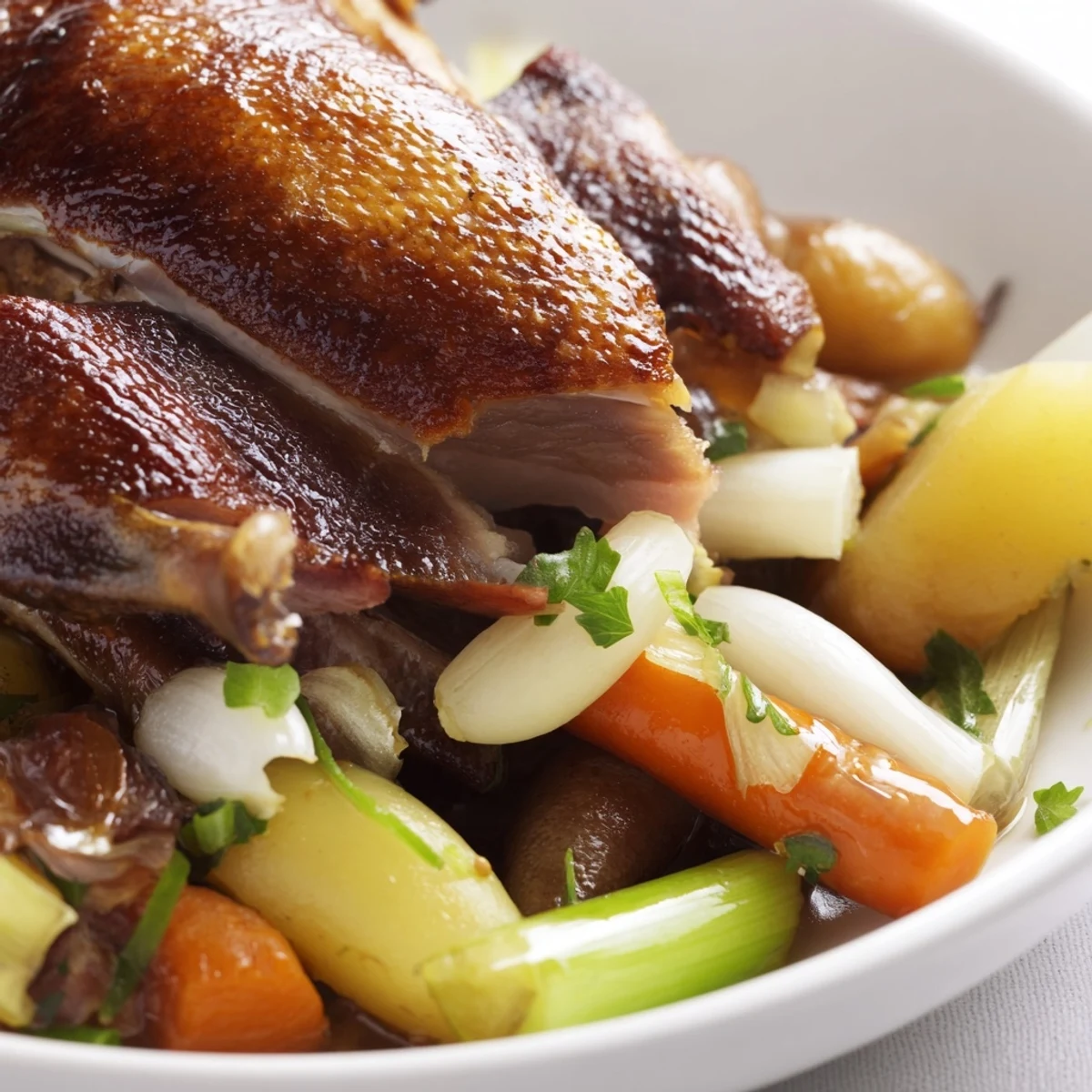
 Begin by patting the duck dry and seasoning inside and out. Sear breast-side down until the skin is deep golden, then brown the other side. Sauté carrots, parsnips, leeks, onion, celery and garlic in rendered fat, deglaze with white wine, nestle the bird atop the vegetables with stock and herbs, and braise covered for about 1½ hours. Finish uncovered at high heat for 20 minutes to crisp the skin, rest 10 minutes, then carve and serve with pan juices and chopped parsley.
The sound of duck fat sizzling in a heavy pot is one of those kitchen noises that makes everyone wander in and ask what is for dinner. My neighbor actually knocked on my door once thinking I had ordered takeout from the fancy French bistro down the street. That evening I taught him how to braise a whole duck right on his own stovetop, and he has not set foot in that restaurant since.
I made this for a rainy Saturday dinner party last autumn when the produce box had delivered a pile of parsnips I had no plan for. The kitchen filled with thyme and wine and roasting duck steam, and nobody even noticed the storm outside.
Ingredients
- 1 whole duck (about 4 to 5 lbs), trimmed of excess fat: A good quality free range duck makes all the difference here, so seek one out if you can.
- 1 and a half tsp kosher salt: Do not skimp on seasoning the bird generously, especially inside the cavity.
- Half tsp freshly ground black pepper: Freshly cracked pepper gives a subtle warmth you cannot get from the pre ground stuff.
- 4 medium carrots, peeled and cut into chunks: Cut them on the thicker side so they hold their shape through the long braise.
- 3 parsnips, peeled and cut into chunks: These turn almost sweet and buttery alongside the duck fat.
- 2 leeks, white and light green parts only, cleaned and sliced: Leeks hide grit between their layers, so rinse them thoroughly under running water.
- 1 yellow onion, quartered: Leave the root end attached when quartering so the pieces stay intact.
- 3 celery stalks, cut into 1 inch pieces: Celery adds an earthy backbone that balances the richer root vegetables.
- 6 garlic cloves, smashed: Smashing rather than mincing lets the garlic perfume the braise without melting away completely.
- 2 tbsp olive oil: Just enough to get the sear started before the duck releases its own glorious fat.
- 1 cup dry white wine: A Loire Valley Chenin Blanc is ideal here because its acidity cuts through the richness beautifully.
- 2 cups low sodium chicken stock: Low sodium lets you control the salt level as the liquid reduces and concentrates.
- 2 sprigs fresh thyme: Strip a few leaves off before braising so the herb infuses more evenly.
- 2 sprigs fresh rosemary: A little goes a long way, so tuck these in whole and remove before serving.
- 1 bay leaf: Do not forget to fish this out before bringing the pot to the table.
- Fresh parsley, chopped: Optional, but a scattering of bright green at the end makes everything look finished.
Instructions
- Preheat and prepare:
- Set your oven to 350 degrees Fahrenheit and move the rack to the lower middle position. Pat the duck completely dry with paper towels, then season it inside and out with kosher salt and pepper, getting into every crease and fold of skin.
- Sear the duck:
- Heat olive oil in a large Dutch oven over medium high heat until the oil shimmers. Lay the duck in breast side down and let it cook undisturbed for 5 to 7 minutes until the skin turns a deep burnished gold, then flip and brown the other side for another 5 minutes before removing the duck to a plate.
- Build the vegetable base:
- Pour off all but about 2 tablespoons of the rendered duck fat from the pot. Toss in the carrots, parsnips, leeks, onion, celery, and smashed garlic, and saute for 7 to 8 minutes until the edges start to caramelize and everything smells impossibly good.
- Deglaze with wine:
- Pour in the white wine and use a wooden spoon to scrape up every last browned bit clinging to the bottom of the pot. Let the wine bubble and reduce by half, which should take about 2 to 3 minutes and fill your kitchen with an incredible aroma.
- Braise low and slow:
- Nestle the duck back into the pot on top of the vegetables, then pour in the chicken stock and tuck in the thyme, rosemary, and bay leaf. Cover with a tight fitting lid and slide the pot into the oven to braise for 1 and a half hours, opening halfway through to baste the duck with the surrounding liquid.
- Crisp the skin:
- Remove the lid and turn the oven up to 425 degrees Fahrenheit. Roast uncovered for 20 minutes until the duck skin blisters and crackles, watching carefully at the end so nothing burns.
- Rest and serve:
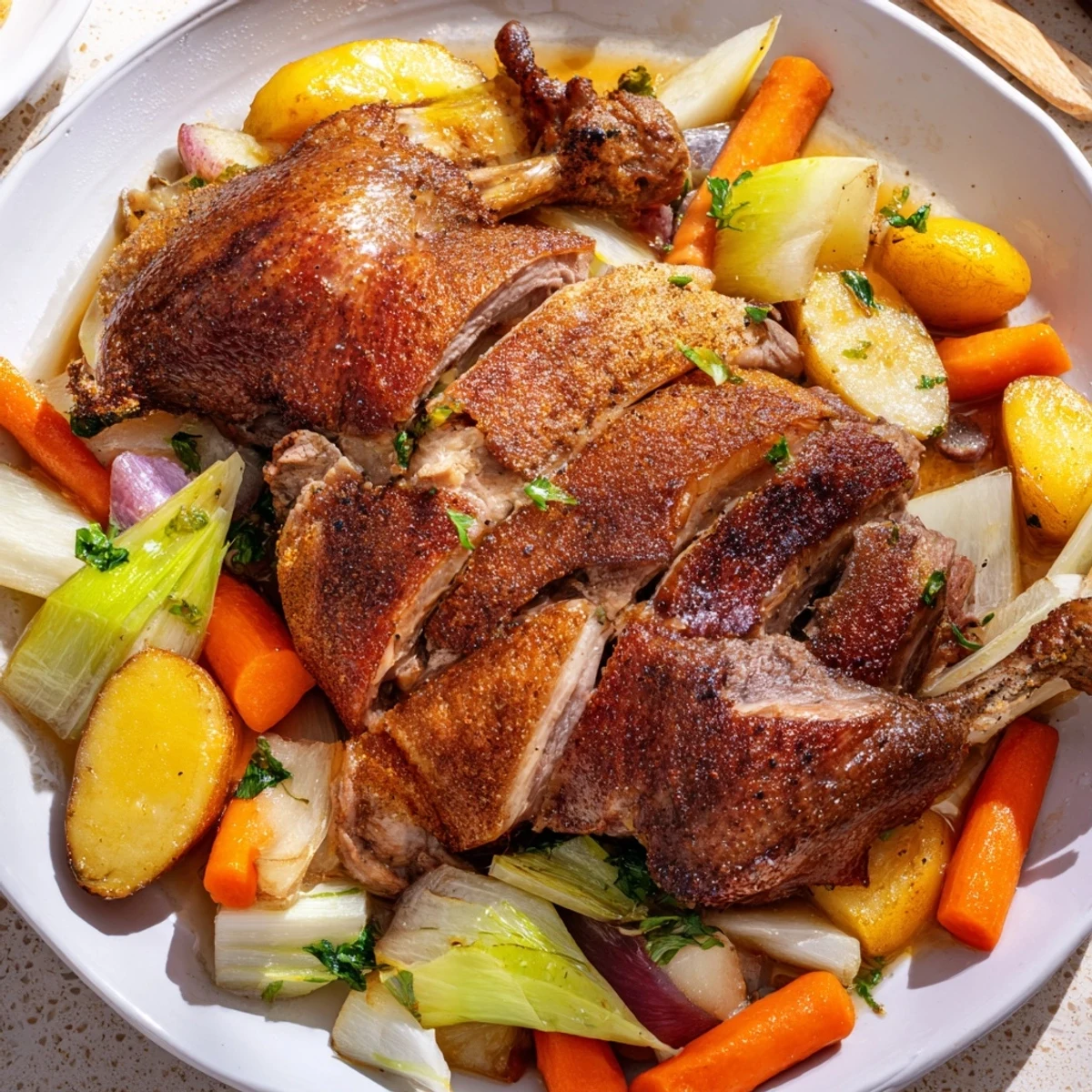
- Transfer the duck to a cutting board and let it rest for 10 minutes before carving it into portions. Ladle the braised vegetables and cooking juices into shallow bowls, arrange the duck on top, and finish with a sprinkle of chopped fresh parsley.
 Pin it
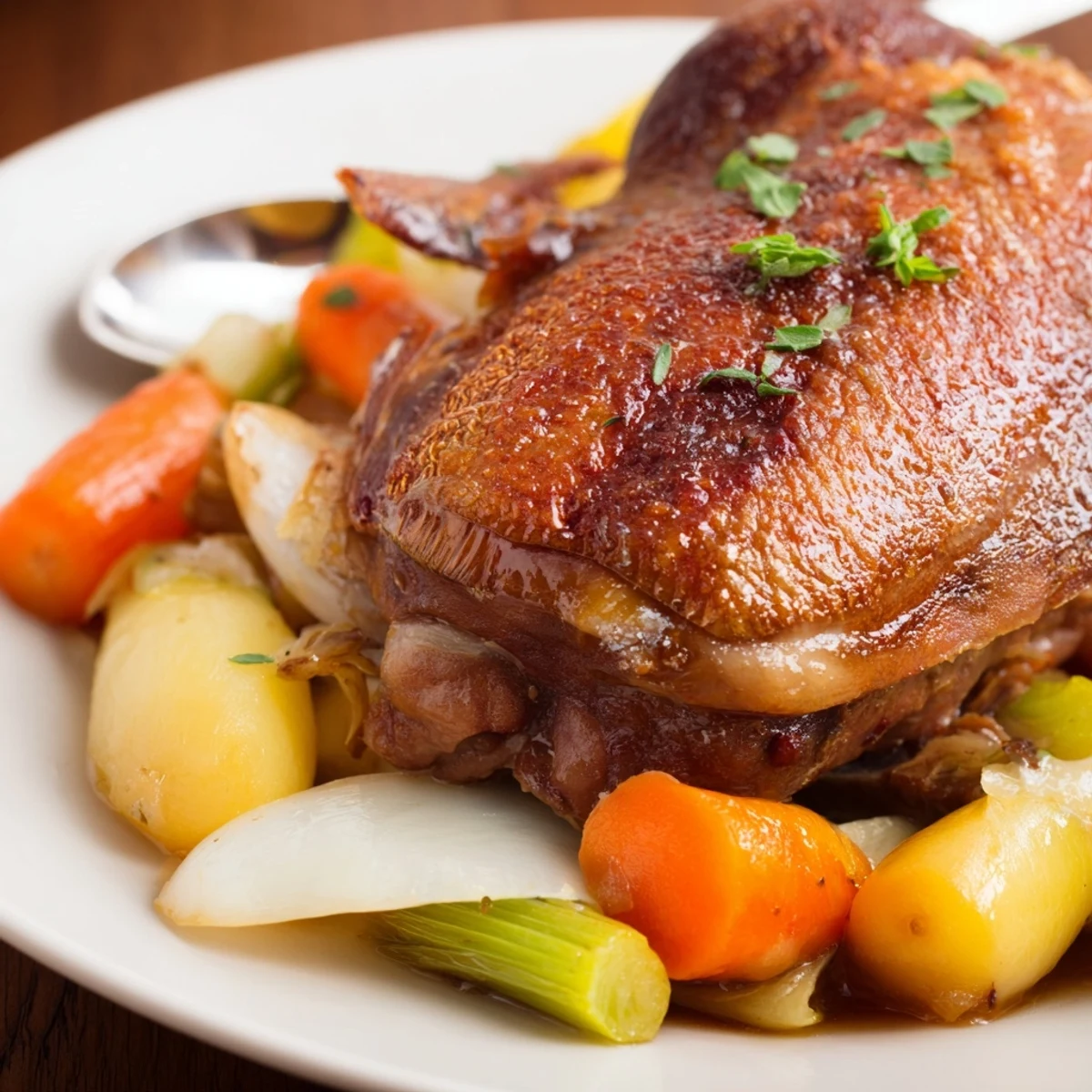
 There is something deeply satisfying about carving a duck you have braised yourself, the juices pooling around tender root vegetables while your guests lean in closer.
What to Pour Alongside
A light Pinot Noir works just as wonderfully as the Chenin Blanc suggestion if you prefer red wine with duck. Chill the white slightly more than room temperature or serve the red just below room temperature for the best pairing experience.
Swapping the Vegetables
Turnips, baby potatoes, or even chunks of butternut squash can stand in for any of the root vegetables listed here. Just keep the pieces roughly the same size so everything finishes cooking at the same time.
Handling Leftovers and Duck Fat
Save every drop of leftover braising liquid because it makes an extraordinary base for soup or risotto the next day. The strained and chilled duck fat is liquid gold for roasting potatoes.
- Store leftover duck meat in the braising juices to keep it moist.
- Reheat gently in a covered pan so the skin does not toughen.
- Never throw away reserved duck fat if you can help it.
 Pin it
 This is the kind of recipe that turns an ordinary evening into something worth remembering, one succulent bite at a time.
Recipe FAQs
- → How do I get the skin extra crispy?
-
Pat the skin very dry and season well. Sear the bird skin-side down until deeply golden, render most fat, then finish at a high oven temperature uncovered to encourage crackling.
- → Can I swap the vegetables?
-
Yes. Sturdy root vegetables like turnips, potatoes or rutabaga work well; they withstand long braising and absorb savory cooking juices.
- → What liquid works best for braising?
-
Dry white wine and low-sodium chicken stock provide acidity and depth. Use a light white like Chenin Blanc or a subtle stock to avoid overpowering the bird.
- → How long should I braise the duck?
-
Braise covered for roughly 1½ hours until meat is tender and nearly falling from the bone, then uncover and roast about 20 minutes to crisp the skin.
- → How should I rest and carve the bird?
-
Let the duck rest 10 minutes after roasting to allow juices to redistribute. Carve against the grain and serve with the braised vegetables and pan juices.
- → What wine pairs well with this dish?
-
Loire Valley Chenin Blanc or a light Pinot Noir complement the richness without overwhelming the savory herbs and root vegetables.