
 Pin it
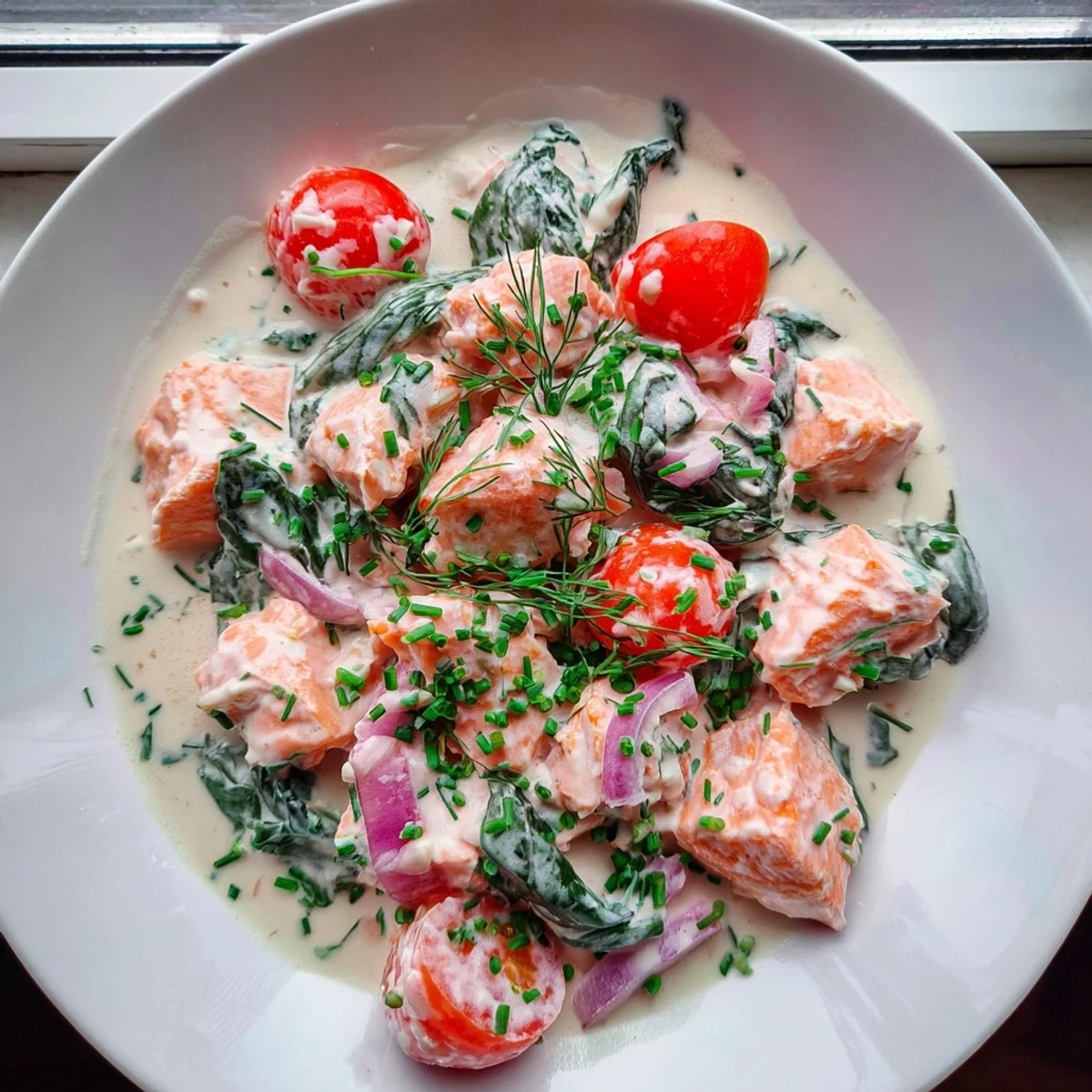
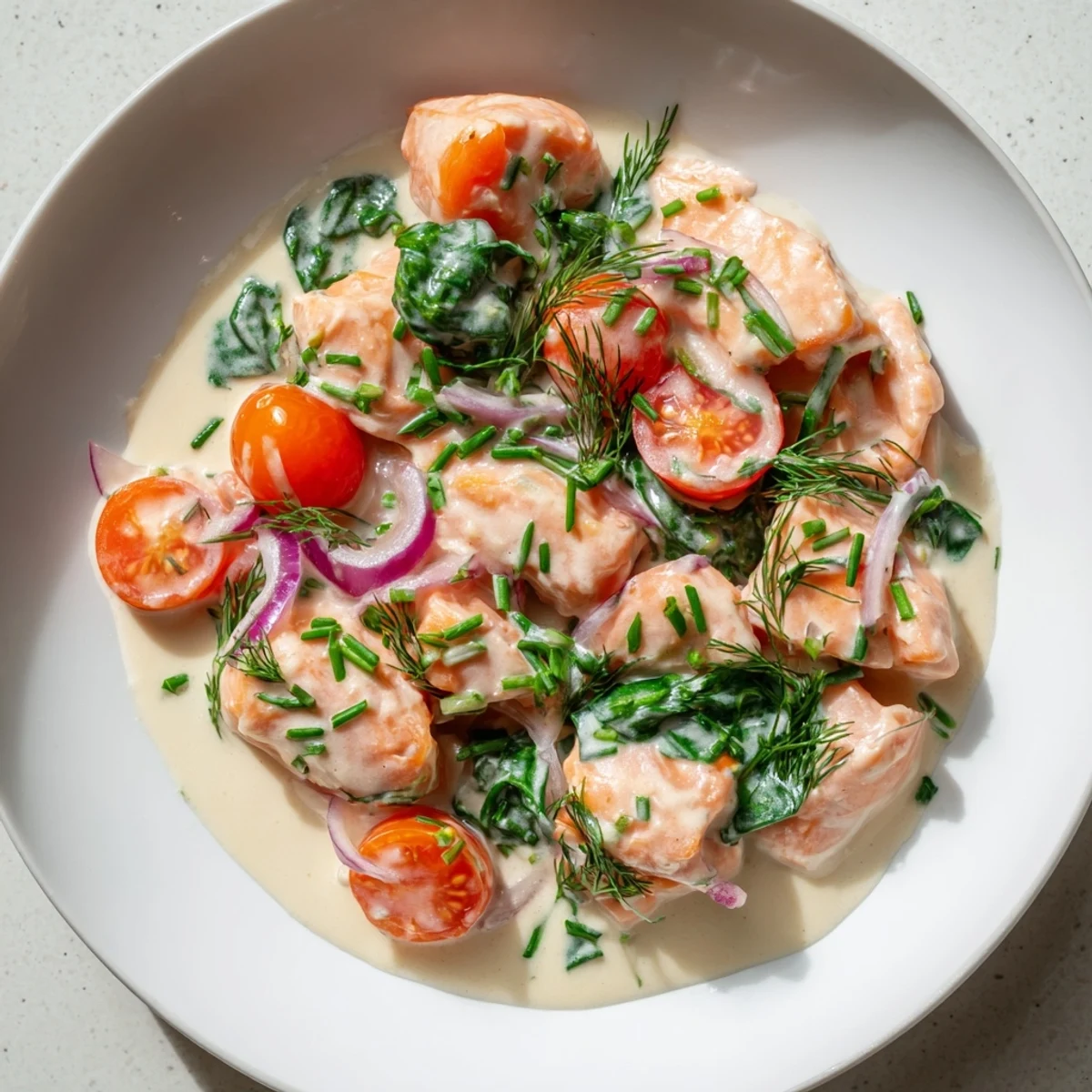
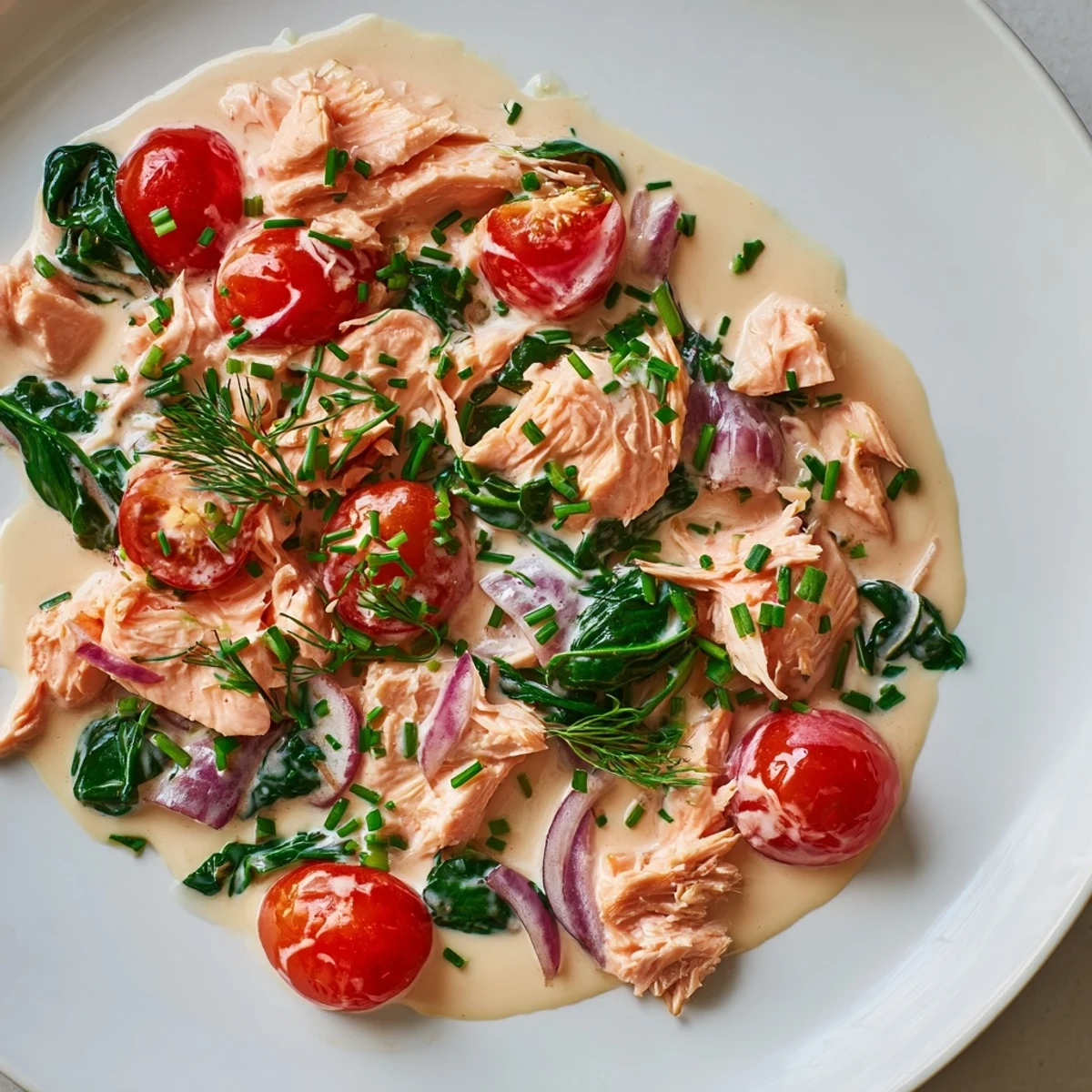
 This creamy leftover salmon skillet transforms yesterday's cooked fish into a satisfying, nutritious meal in just 25 minutes. Flaked salmon is gently warmed in a luscious sauce made from Greek yogurt and light cream cheese, then brightened with fresh lemon zest, juice, and dill.
Baby spinach and cherry tomatoes add color, vitamins, and a lovely freshness to every bite. At just 290 calories per serving with 32 grams of protein, it's an excellent low-carb, pescatarian-friendly option that works beautifully for both lunch and dinner.
Serve it on its own for a light meal, or over quinoa, rice, or whole-grain pasta for something heartier. It's also easily adaptable — swap in kale for spinach, use plant-based dairy alternatives, or toss in extra cooked vegetables you have on hand.
There is something deeply satisfying about opening the fridge the day after a big salmon dinner and realizing the leftovers are an invitation, not a burden. The flaky pink chunks sitting in their container always remind me of my friend Clara, who once declared that leftover fish was beneath her, then proceeded to eat three helpings of this exact dish without coming up for air. It became our Thursday tradition, a way to stretch one beautiful piece of fish into something that felt entirely new. Creamy, bright, and packed with vegetables, this recipe turned skepticism into a standing request.
One rainy evening I made this for my neighbor Dave, who had just returned from a exhausting business trip and was standing in his doorway looking completely defeated. I handed him a warm bowl over the fence that separates our patios, and he stood there eating it in the drizzle, fork clinking against ceramic, telling me it was the best thing he had eaten all week. Moments like that are why I keep this recipe pinned to my fridge.
Ingredients
- 2 cups cooked salmon (flaked, skin and bones removed): Leftover grilled, baked, or poached salmon all work beautifully, just be thorough about removing pin bones.
- 1/2 cup Greek yogurt (or reduced fat creme fraiche): This is the backbone of the creamy sauce, adding tang and protein without heaviness.
- 1/4 cup light cream cheese (softened): Let it sit at room temperature for twenty minutes so it melts smoothly into the sauce without clumping.
- 1 cup baby spinach (chopped): A quick rough chop helps it wilt evenly and distribute throughout the dish.
- 1 cup cherry tomatoes (halved): Their natural sweetness balances the richness of the dairy and the briny depth of the salmon.
- 1/2 small red onion (thinly sliced): Thin slices melt into the sauce and add a gentle bite without overpowering.
- 1 clove garlic (minced): One clove is enough here, you want a whisper of garlic, not a shout.
- 1/2 cup low sodium chicken or vegetable broth: This loosens the sauce and adds depth, go for low sodium so you can control the salt.
- 1 tablespoon fresh dill (chopped, or 1 teaspoon dried dill): Dill and salmon are old friends, fresh dill is worth seeking out if you can find it.
- 1/2 teaspoon lemon zest: The zest carries bright aromatic oils that wake up every other flavor in the pan.
- Juice of 1/2 lemon: A squeeze at the end ties the creaminess together with a clean, sharp edge.
- 1/4 teaspoon black pepper: Freshly cracked makes a real difference here since the sauce is so simple.
- 1/4 teaspoon salt (to taste): Start light and adjust at the end, especially if your broth is not low sodium.
- 2 tablespoons chives (chopped): Scattered over the top at the end for a fresh oniony finish and a pop of green.
- Cooked quinoa, rice, or whole grain pasta (optional, for serving): A bed of grains turns this from a skillet meal into a proper dinner.
Instructions
- Wake Up the Aromatics:
- Heat a large non stick skillet over medium heat with a splash of oil or broth, then slide in the sliced red onion and minced garlic, stirring until the kitchen smells warm and sweet, about two to three minutes.
- Wilt the Greens and Soften the Tomatoes:
- Toss in the chopped spinach and halved cherry tomatoes, letting them cook for another two to three minutes until the spinach collapses and the tomatoes release their juices into the pan.
- Build the Creamy Sauce:
- Pour in the broth, then add the softened cream cheese and Greek yogurt, stirring constantly until everything melts together into a smooth, glossy sauce that coats the back of your spoon.
- Fold in the Salmon and Finish:
- Gently fold the flaked salmon into the sauce along with the dill, lemon zest, lemon juice, salt, and pepper, cooking just until the salmon is warmed through, about two to three minutes, then taste and adjust seasoning before serving with a shower of chopped chives.
 Pin it
 I once packed this into a thermos for a cold soccer game and ate it on the bleachers while my daughter ran drills, and the coach leaned over and asked what smelled so good that it was distracting him from watching the plays.
Making It Your Own
Swap the spinach for kale or Swiss chard if you want something heartier that stands up to the creamy sauce with a bolder, earthier flavor. Toss in any leftover roasted vegetables lurking in your fridge, roasted broccoli or caramelized bell peppers blend in seamlessly and add extra fiber. For a dairy free version, unflavored plant based yogurt and vegan cream cheese work surprisingly well, just taste and adjust the lemon and salt a little more aggressively.
What to Serve Alongside
A glass of dry Sauvignon Blanc mirrors the lemony brightness in the dish and cuts through the richness of the sauce beautifully. A simple green salad with a vinaigrette on the side provides crunch and acidity that balance the creamy texture. If you are serving this over quinoa or rice, a warm crusty roll on the side turns it into a meal that feels complete rather than improvised.
Tools and Timing
You really only need a good non stick skillet, a sturdy cooking spoon or spatula, a knife and cutting board, and measuring cups and spoons to pull this together. The entire process moves quickly, about ten minutes of prep and fifteen minutes at the stove, so have everything chopped and measured before you turn on the heat.
- Take the cream cheese out of the fridge first so it is soft when you need it.
- Flake the salmon while it is still cold from the fridge, it falls apart more cleanly that way.
- Taste the finished dish one last time before serving, a tiny pinch of salt or squeeze of lemon at the end makes everything sing.
 Pin it
 This is the kind of recipe that reminds you leftovers are not a compromise, they are a head start on something even better. Make it once and it will quietly become the dish you look forward to more than the original dinner.
Recipe FAQs
- → Can I use canned salmon instead of leftover cooked salmon?
-
Yes, canned salmon works well as a convenient alternative. Drain it thoroughly and remove any large bones or skin before flaking. Canned salmon is already cooked, so simply fold it in during the final heating step just as you would with leftover cooked salmon.
- → How do I store and reheat leftovers?
-
Store any leftovers in an airtight container in the refrigerator for up to 2 days. To reheat, warm gently in a skillet over low heat, stirring occasionally. Avoid high heat or prolonged cooking, as the yogurt-based sauce can separate. A brief stint in the microwave at reduced power also works.
- → What can I substitute for Greek yogurt in the creamy sauce?
-
Reduced-fat crème fraîche is a direct substitute mentioned in the ingredients. You can also use sour cream for a slightly tangier result, or unflavored plant-based yogurt for a dairy-free version. Plain cottage cheese blended until smooth is another protein-rich option that creates a similarly creamy texture.
- → Is this dish suitable for meal prep?
-
Yes, this salmon skillet is great for meal prep. Prepare the dish as directed and portion into individual containers. The flavors actually develop nicely as it sits. Keep refrigerated and consume within 2 days. Reheat gently to preserve the creamy sauce texture and avoid overcooking the salmon.
- → What side dishes pair well with creamy salmon?
-
Quinoa, brown rice, or whole-grain pasta make excellent bases for soaking up the creamy sauce. For a low-carb option, serve it alongside roasted asparagus, steamed broccoli, or a simple green salad with vinaigrette. Crusty bread also works wonderfully for scooping up every last bit of the tangy sauce.
- → Can I use frozen spinach instead of fresh baby spinach?
-
Frozen spinach can be used in a pinch. Thaw it completely and squeeze out as much excess moisture as possible before adding it to the skillet. Use about 1/3 cup of thawed, drained frozen spinach to replace the 1 cup of fresh chopped baby spinach called for in the ingredients.